
 Reviewed by
A chatbot for customer support is one of the most effective ways for an online store to instantly answer customer questions and free up its support team. It can take the repetitive load (order status, returns, shipping) off your inbox and answer those questions the moment a customer asks.
WooCommerce alone powers 7+ million active stores, and most of them field the same handful of questions over and over. The right chatbot handles those instantly, so your team can focus on the cases that actually need a human.
In this article, we’ll explain what a customer support chatbot is, what it can actually handle, how it works alongside your team, and how StoreAgent fits in if you run WooCommerce. So, let’s get started!
Table of Contents
What Is A Customer Service Chatbot?
A customer service chatbot is software that simulates human conversation to resolve customer questions. It can answer FAQs, provide order updates, process simple returns, and connect customers to human support agents when needed.
There are two main types: rule-based chatbot and AI chatbot for customer support.
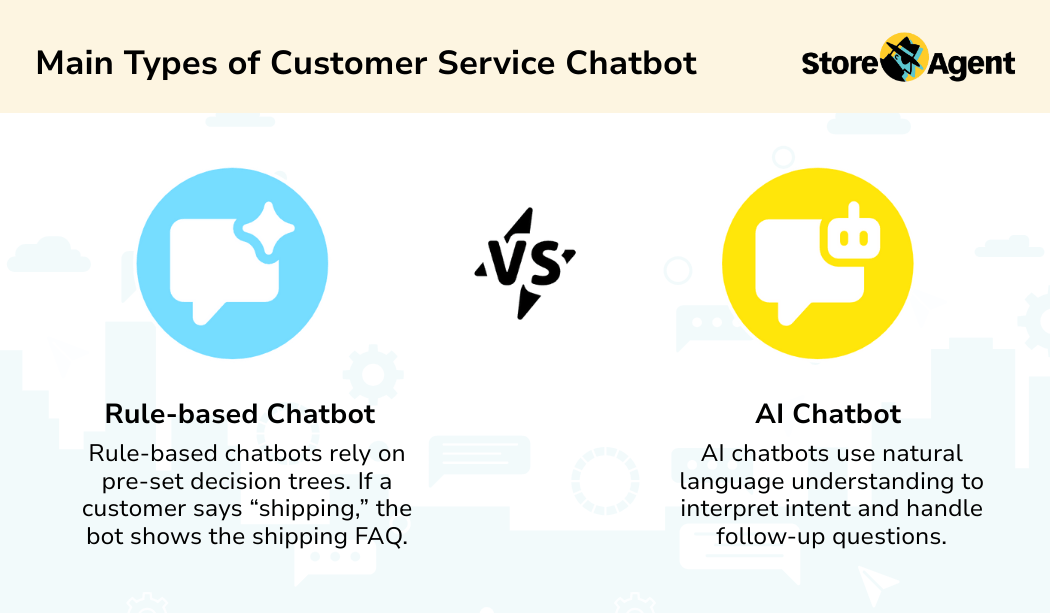
Rule-based chatbots rely on pre-set decision trees. If a customer says “shipping,” the bot shows the shipping FAQ. This works well for predictable questions but struggles with nuance.
AI chatbots, on the other hand, use natural language understanding to interpret intent and handle follow-up questions. A rule-based service chatbot is a good entry point, but AI chatbots are now the standard for stores that want flexible, natural customer interactions.
Core Advantages Of AI Chatbot For Customer Support
An AI chatbot for customer support delivers clear business results because it boosts your team’s efficiency, resolves questions faster, and gives customers help the moment they need it. The core outcomes you can expect are higher satisfaction and lower operational costs.
To learn more about these advantages, read our complete guide on the Benefits Of Using AI Chatbots.
Why AI customer support outperforms rule-based chatbots
An AI chatbot for customer service understands natural language and keeps track of context across multiple messages. This means it can resolve a question like “where’s my order, and can I still change the address?” without making the customer repeat details.
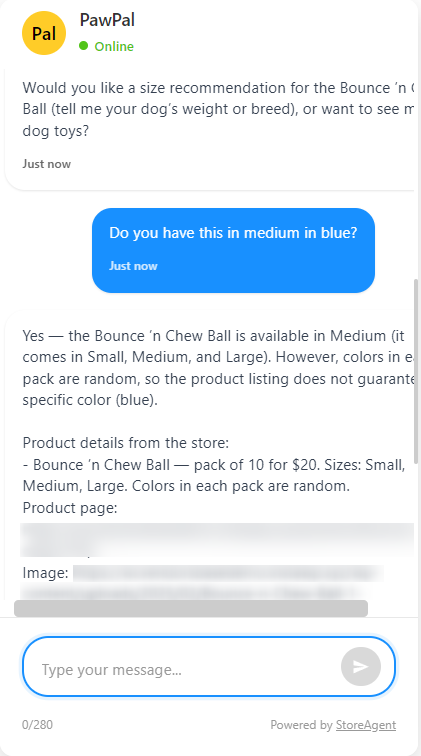
Unlike rule-based chatbots, AI systems adapt in real time. By connecting directly to your order and policy data, the answers stay accurate and current, which reduces escalations and repeat tickets. The longer the chatbot runs, the more you learn about what customers actually ask.
🤖 Experience It Live: See how an AI chatbot uses live store data to give instant, accurate answers. Interact with our StoreAgent Chat Demo to feel the difference between a basic bot and a true AI support assistant.
What Can A Chatbot For Customer Support Handle?
A chatbot for customer support handles the repetitive questions that fill your inbox: order status, shipping timelines, returns and refunds, and basic account or product questions. It answers them instantly, around the clock, and only passes the unusual cases to your team. These are the everyday tickets that don’t need a human, but still need a fast answer.
- Order status and tracking: “Where’s my order?” is the single most common support question. A connected chatbot pulls the order and gives the live status instead of making the customer wait for an email.
- Returns, refunds, and exchanges: The bot can explain your policy, check whether an order qualifies, and start the request, then hand off if a human needs to approve it.
- Shipping and delivery questions: Cut-off times, delivery estimates, and “has it shipped yet?” are answered straight from your store rules.
- Post-sale and account help: Warranty terms, how to reorder, or updating account details, the kind of follow-up that arrives after the sale and rarely needs an agent.
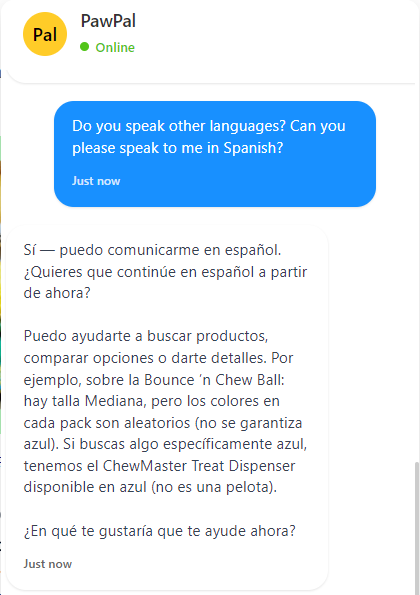
If you sell internationally, language matters too. A good support chatbot detects the customer’s language and replies in it, so a shopper in Madrid gets the same fast answer as one in Manchester.
How A Customer Support Chatbot Works With Your Team
The best setup is hybrid: the chatbot handles the repetitive, high-volume tickets first, then hands off complex cases to a human agent with the full conversation history attached. Customers avoid repeating themselves, and your agents jump straight to solving the real issue instead of starting cold.
A strong chatbot doesn’t just deflect tickets. It resolves them, completing tasks like checking refund status or tracking an order, and escalates only when it genuinely can’t help. That difference is what keeps deflection from turning into customer frustration.
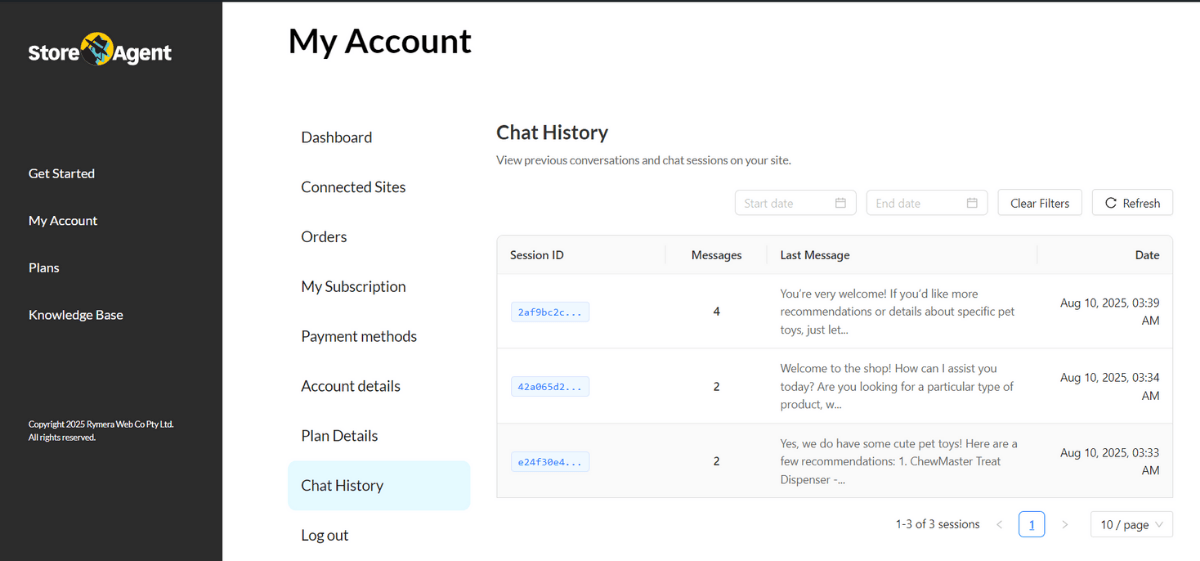
Because support chatbots touch sensitive data like orders and addresses, controls matter. Look for role-based access, transcript history you can review, and the ability to redact personal details. Those aren’t nice-to-haves, they’re what keeps customer trust intact while you automate.
How StoreAgent Chat Helps With Customer Support
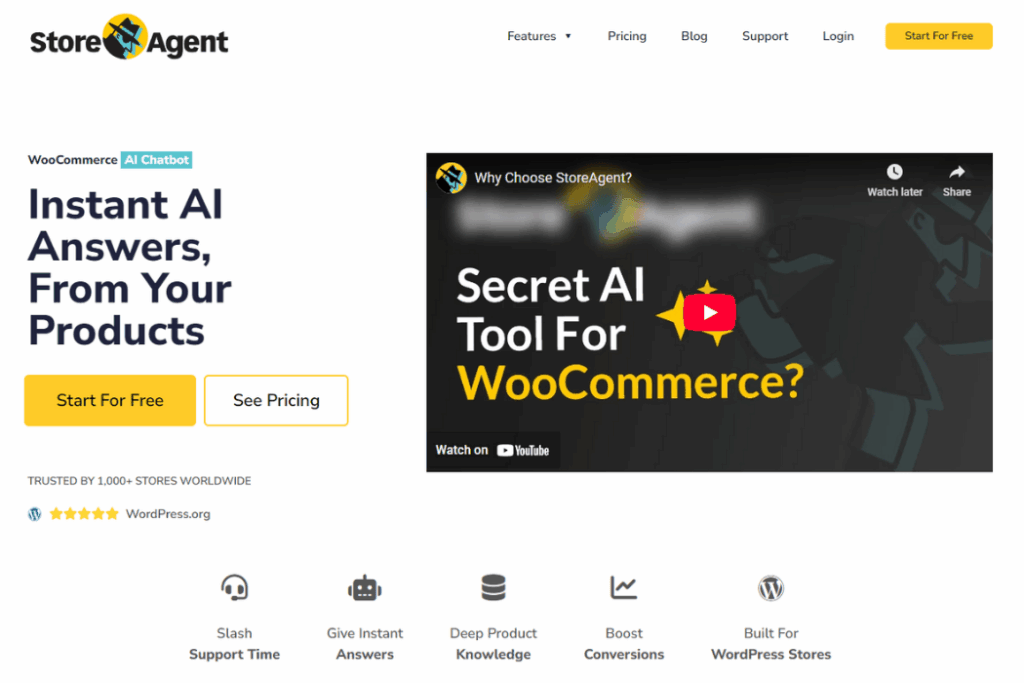
If you run WooCommerce, StoreAgent Chat is built to handle support out of the box. It connects directly to your store, so it answers order, stock, and policy questions accurately, while conversational AI memory keeps each chat flowing naturally.
For lean teams, it’s the most practical way to cover support without round-the-clock staffing. The chatbot manages the routine tickets and escalates the rest, with full transcripts so nothing gets lost in the handoff.
Comparing tools across platforms, pricing, and features? Our AI chatbot for ecommerce buyer’s guide breaks down the options side by side. This page is about what a support chatbot does. That one helps you choose.
Related Reads:
Conclusion
A chatbot for customer support is becoming standard for stores that want to scale without overwhelming their teams. From answering order questions instantly to handling returns and escalating the tricky cases with full context, it improves the customer experience while cutting support costs.
Here’s what we covered:
- What a customer service chatbot is
- The core advantages of an AI chatbot for customer support
- What a support chatbot can handle
- How it works alongside your team
If you’re ready to cut repetitive tickets and deliver reliable support, try our StoreAgent Chat Demo, then explore our plans to see how the right chatbot for customer support can work for your store.
Frequently Asked Questions
How does an AI chatbot for customer service work with human agents?
An AI chatbot for customer service manages repetitive questions first, then hands off complex cases to human agents with full chat history. This way, customers avoid repeating themselves and agents can jump straight to solving the real issue.
These bots qualify intent, capture order details, and surface answers instantly. When escalation happens, transcripts and context move with the customer, making the experience seamless and saving agents from starting cold.
What metrics prove ROI for AI customer support?
Key ROI signals for AI customer support include higher containment rates, reduced ticket volume, and faster resolution times. Pair these with customer satisfaction (CSAT) scores and you’ll see both cost savings and happier customers.
The per-ticket savings are real, too. According to DemandSage, the cost per interaction drops from roughly $6.00 for a human agent to about $0.50 for a chatbot. By comparing performance before and after rollout, you get clear evidence of the value AI brings to support.
What data does a chatbot need to be accurate?
A chatbot needs real-time access to product catalogs, order data, shipping rules, and FAQs to stay accurate. Without this, it risks giving outdated or generic responses that erode trust.
For best results, connect your chatbot to live store systems via APIs or direct integrations. This lets the AI give up-to-date answers on price, stock, and policies. Guardrails like data refreshes and context tracking help prevent mistakes.
Is a chatbot or live chat better for small teams?
For small teams, a chatbot is usually more efficient because it handles repetitive, high-volume inquiries around the clock. Live chat alone requires constant coverage, which can quickly overwhelm a lean staff.
The most effective setup is hybrid: let the chatbot manage FAQs, order tracking, and common returns, while human agents focus on unusual or sensitive cases. If you’re still deciding, read our breakdown comparing WooCommerce AI Chatbot vs. Live Chat to see which makes sense for your store’s growth stage.