
 Reviewed by
Chatbots have moved from scripted novelties to AI assistants that resolve real customer questions, and the chatbot statistics on adoption, satisfaction, and ROI all reflect it. The global chatbot market sat near $9.6 billion in 2025 and is projected to roughly triple by 2030 at about 23% annual growth (Grand View Research).
The figures below, drawn from neutral industry research, cover how widely chatbots are used, what shoppers expect from them, and the returns stores actually see.
One caution sits over every number: “chatbot” covers two very different things, and blended averages hide that. We run an AI chatbot for WooCommerce, so we read these numbers through a store owner’s lens and flag where the headline understates what a good tool does.
Table Of Contents
How To Read These Chatbot Statistics
Read every chatbot statistic by asking which kind of chatbot is being measured. That one habit is what separates useful chatbot statistics from misleading ones. Old rule-based bots follow rigid scripts and frustrate people. Modern AI assistants understand the question and answer from real data. Aggregate surveys blend both, so a so-so satisfaction average often hides excellent results for AI bots and poor ones for scripted bots.
The same split applies to market and ROI figures. A “$9 billion chatbot market” includes basic FAQ widgets and full AI agents alike. Different forecasters also publish very different headline numbers (you’ll see chatbot market figures range widely across roundups), which is exactly why the category-versus-technology distinction matters.
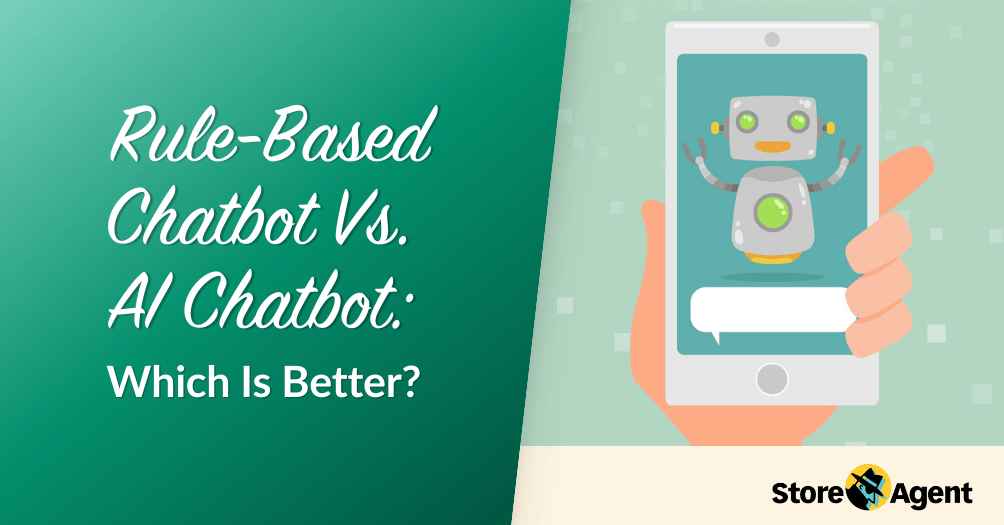
For your store, the technology is what determines the result. We dig into that distinction in our breakdown of a rule-based chatbot vs an AI chatbot.
Chatbot Market Size And Growth
The chatbot market is growing fast and the projections are consistent across forecasters: low-double-digit billions today, scaling at roughly 23% a year through the end of the decade.
- ~$9.6 billion global chatbot market in 2025, projected to reach about $27.3 billion by 2030 at a ~23.3% CAGR (Grand View Research).
- The broader conversational AI market was ~$11.6 billion in 2024, on track for roughly $41 billion by 2030 at a ~23.7% CAGR (Grand View Research) as chatbots fold into voice and agent use cases.
- Growth is supply-driven as much as demand-driven: no-code AI tooling has pushed chatbots from enterprise budgets into reach of single-operator stores.
What this means for your store: the size of the market matters less than the speed it’s growing. A ~23% CAGR means the technology, integrations, and pricing keep improving year over year, so a chatbot you dismissed as clumsy two years ago is a different product today. The cost of waiting is that your competitors adopt during the steepest part of that curve.
Chatbot Adoption Statistics
Adoption has shifted from “early experiment” to “default expectation,” and the jump in a single year is the clearest signal in the whole dataset.
- 66% of service organizations now run AI agents, up from 39% the prior year (Salesforce, State of Service), a near-doubling in twelve months.
- 91% of customer service leaders are under pressure to implement AI in their service operations (Gartner).
- Over 80% of customer-care executives are already investing in AI or planning to (McKinsey). Adoption intent now spans nearly the whole field, not just large players.
- 70% of organizations that deploy AI agents see measurable value within 60 days (Salesforce). Payback windows have shortened from quarters to weeks.
What this means for your store: the leap from 39% to 66% in one year shows chatbots have become the current baseline. This isn’t a future trend you can wait on. For a small WooCommerce store the practical implication is that shoppers increasingly expect a chat option that actually works, and the tooling to provide one is now mainstream and affordable rather than cutting-edge.
If you want the shortlist, our pick of the best WordPress chatbot plugin options walks through what to look for.
What Shoppers Expect From Chatbots
Shoppers aren’t against chatbots. They’re against slow and useless ones. The data is consistent: they reach for self-service first on simple issues, expect near-instant answers, and want a clear human path when the bot can’t help. According to HubSpot’s customer service research, most shoppers now expect fast resolution and increasingly reach for self-service tools first.
- ~61% of customers prefer self-service for simple issues (Salesforce). A chatbot is the front line of that preference.
- Response speed is the dominant expectation: satisfaction drops sharply as wait time grows, and “instant” is the bar a 24/7 bot is uniquely able to meet.
- Most reported chatbot interactions are rated neutral or positive in consumer surveys, with the negative tail concentrated on scripted bots that can’t understand the question.
- Shoppers still want an escape hatch: acceptance of AI chatbots for routine questions runs alongside a strong expectation of a human path for complex or emotional ones.
What this means for your store: the winning setup matches the expectation exactly. Handle the routine in chat, escalate the rest. Shoppers will happily use chat for a quick stock, shipping, or returns answer as long as it’s accurate and instant, and they want an obvious way to reach a person when it isn’t.
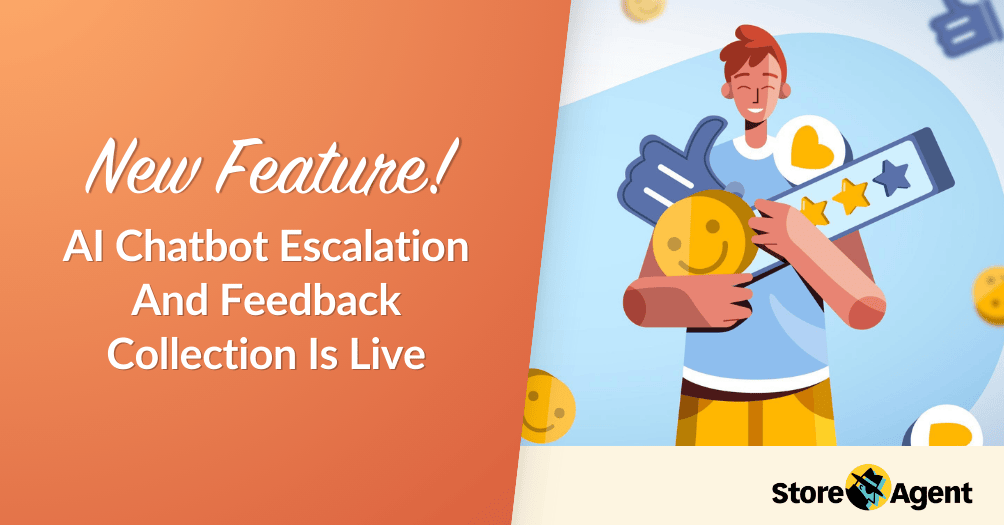
Building that handoff well is its own skill; we cover it in AI chatbot escalation and feedback collection.
Chatbot ROI And Impact Statistics
The return shows up in two places at once: lower cost on routine tickets and recovered revenue on questions that would otherwise end in an abandoned cart. The neutral research quantifies both.
- Generative AI could automate up to ~30% of the hours currently spent across customer operations (McKinsey). These are the routine, repetitive contacts a bot is best suited to absorb.
- AI-enabled self-service can cut incidents by 40–50% with cost-to-serve reductions of more than 20% (McKinsey).
- Contact-center AI has delivered 30–40% cost reduction alongside NPS gains among leading adopters (PwC).
- ~70% of online carts are abandoned on average (Baymard Institute). A fast, accurate answer at the moment of hesitation is one of the few levers that recovers them in real time.
What this means for your store: for a small store the revenue side is often bigger than the cost side, because a single recovered order can outweigh a month of saved support minutes. The cost savings are real, but the cart-recovery angle is where a WooCommerce chatbot earns its keep.
💡 We break down the full picture in our analysis of the ROI of AI customer service and how it helps reduce customer support costs with AI.
Why The Bot Type Changes The Numbers
The single most useful thing to understand about chatbot statistics is that the “do people like chatbots?” debate is really two debates. The chatbots that score badly in satisfaction surveys are almost always old rule-based bots that can’t understand the question and trap customers in menus. The ones that score well are AI assistants connected to live data that actually answer.
Same category, opposite experience.
That’s why a blended industry average can mislead your decision. The relevant question isn’t “are chatbots good?” but “is this chatbot an AI assistant reading my real store data, or a script?”
Choose the former and the favorable half of these statistics is the half that applies to you, not the blended average a survey reports.
What we’ve seen: the chatbots that score badly in satisfaction surveys are almost always old-style rule-based bots that can’t understand the question. When we connect StoreAgent to a store’s live catalog and orders, the questions that used to dead-end (“is this back in stock?”, “where’s my order?”) get answered instantly, and that’s exactly where the satisfaction and ROI numbers separate. The technology being measured matters as much as the category it falls under. You can check your own numbers on StoreAgent’s AI insights dashboard, which ties chatbot revenue to real WooCommerce orders.
💡 For the longer comparison, see WooCommerce AI chatbot vs live chat and the broader rundown of types of chatbot. This article reports chatbot statistics in general; it’s distinct from our guide to measuring your own AI chatbot’s metrics, which covers the KPIs to track on your store.
What This Means For Your WooCommerce Store
The data favors modern, AI-driven chatbots connected to your store, not scripted bots. The takeaway for a WooCommerce store is to skip the rule-based era entirely and start with an assistant that reads your live catalog and orders, so you land in the favorable half of every statistic above.
StoreAgent is a no-code WooCommerce AI assistant. It covers the routine questions these statistics are really about:
- Auto-ingests your catalog and pages
- Answers around the clock
- Works in multiple languages
- For logged-in customers, looks up live order status
- Hands off to a human on paid plans when a question needs one
It starts free on the Lite plan, then scales up through Growth ($19), Pro ($49), and Business ($249) for larger stores, so the adoption curve in the data above is now within reach of a single-operator store. You’ll need a free StoreAgent.ai account to connect it.
That puts the adoption curve in the data above within reach of a single-operator store. You’ll need a free StoreAgent.ai account to connect it.
If you’re acting on these numbers, the practical next step is grounding the bot in your own data rather than generic scripts. Our walkthrough on how to train an AI chatbot on your WordPress site shows what that looks like in practice.
If you’re ready to land on the right side of these chatbot statistics, the move is simple: connect an AI chatbot that reads your live store data and answers in real time.
Sources And Methodology
Figures are drawn from neutral, primary research rather than vendor marketing: Grand View Research (market size and CAGR), Salesforce State of Service (AI agent adoption and value timelines), Gartner and McKinsey (adoption intent and automation/cost-to-serve), PwC (contact-center cost reduction), and Baymard Institute (cart abandonment).
Where satisfaction data blends rule-based and AI bots, we flag the distinction instead of quoting a single misleading average, and we describe consumer-preference figures cautiously where only aggregator reporting exists. Treat market projections as direction, not certainty.
- Grand View Research, Chatbot Market Report: supports the ~$9.6B 2025 / ~$27.3B 2030 market size and ~23.3% CAGR, and the conversational AI market figures.
- Salesforce, State of Service: supports the 66% (up from 39%) AI agent adoption, value-within-60-days, and self-service preference figures.
- Gartner: supports the 91% of service leaders under pressure to implement AI.
- McKinsey: supports the ~30% of customer-operations hours automatable, the 40–50% incident cut and 20%+ cost-to-serve reduction, and 80%+ executive investment.
- PwC: supports the 30–40% contact-center cost reduction.
- Baymard Institute: supports the ~70% average cart abandonment rate.
Frequently Asked Questions
How common are chatbots in ecommerce?
Increasingly standard. Most service organizations now run AI agents (66%, up from 39% a year earlier, per Salesforce), over 80% of customer-care executives are investing in AI (McKinsey), and the chatbot market is growing at roughly 23% a year through 2030 (Grand View Research). For ecommerce specifically, a working chatbot option is now an expectation rather than a differentiator.
Do customers like chatbots?
They like the ones that work. Satisfaction is high for AI chatbots that understand questions and answer accurately, and low for old rule-based bots that can’t. Most reported interactions are rated neutral or positive, and the negative tail is concentrated on scripted bots, so the underlying technology is what determines the experience, not the chatbot label.
What’s the ROI of a chatbot?
Strong on both cost and revenue. AI self-service can cut incidents 40–50% and reduce cost-to-serve by more than 20% (McKinsey), and contact-center AI has delivered 30–40% cost reduction among leading adopters (PwC). On the revenue side, fast answers help recover some of the ~70% of carts abandoned on average (Baymard Institute). Returns are strongest when the bot is connected to live store data.
How big is the chatbot market?
The global chatbot market was about $9.6 billion in 2025 and is projected to reach roughly $27.3 billion by 2030, a CAGR of around 23.3% (Grand View Research). The broader conversational AI market, which folds chatbots into voice and agent use cases, was about $11.6 billion in 2024 and is forecast near $41 billion by 2030.
What’s the difference between a chatbot and an AI agent?
A rule-based chatbot follows preset scripts and decision trees; an AI agent understands natural language and can take actions like looking up an order or recommending a product. Most modern ecommerce “chatbots” are now AI agents, which is why recent statistics look so different from numbers reported a few years ago.
Where do these chatbot statistics come from?
These chatbot statistics come from neutral industry research, not vendor marketing: Grand View Research, Salesforce, Gartner, McKinsey, PwC, and Baymard Institute. Where data blends rule-based and AI bots, we flag the distinction rather than quote a single average. Treat the figures as direction for your own store rather than guaranteed outcomes.