

If you’re weighing StoreAgent vs PurioChat, you probably arrived through the arithmetic. PurioChat’s product page leads with “Pay Once, Use Forever” and a $69 one-time licence, then sets it against hosted chatbots at $384 and $948 a year. Bring your own OpenAI or Gemini key, the page says, and $5 covers roughly 3,000 messages. Against a monthly subscription that looks less like a discount and more like a different category of purchase.
Here’s what that page doesn’t say up front. Scroll to the FAQ block titled “Is this right for my website?” and PurioChat tells you where the model breaks: WordPress runs on MySQL, MySQL has no native vector search, so every similarity calculation runs in PHP on your own server. Search speed depends on your CPU and how many items you’ve indexed. The same paragraph sets the ceiling in the vendor’s own words: optimised for up to a few thousand items.
So StoreAgent vs PurioChat isn’t really a contest between two chatbots. Both are native WooCommerce plugins, both read your live catalogue, and both show product cards in chat. It’s a choice about where the AI runs, who pays the model bill, and how much of the job you want the tool to do once the shopper leaves. This comparison covers what each one can read, what happens as your catalogue grows, what you’d really pay across two years, and what each one does beyond answering questions.
StoreAgent Vs PurioChat: The Short Answer
StoreAgent is the better choice for a store that expects to grow, because the AI, the vector store and the model bill are all managed for you, and the same plan also writes your product content and reports on what the chat earned. PurioChat is the better choice if your catalogue is small, your priority is a one-time cost, and you want every byte of conversation data to stay in your own database.
PurioChat is a genuinely good WooCommerce chatbot, and it does two things StoreAgent doesn’t do at all: a human live chat with a shared team inbox, and a shipped MCP connection. Those are different purchases, and it’s worth knowing which one you’re making.
| Comparison Factor | StoreAgent | PurioChat |
|---|---|---|
| AI on WooCommerce | Native, runs on your store | Native, runs on your store |
| Where the AI runs | Managed cloud, no keys to paste | Your server, plus your own provider key |
| Catalogue scale | Cloud vector memory, quota per plan | Documented: similarity maths run in PHP, optimised for a few thousand items |
| AI usage cost | Included in the plan | Billed to you by OpenAI, Gemini or Mistral |
| Pricing model | Flat monthly, unlimited websites on paid plans | One-time or yearly, licensed per site |
| Free plan | Yes, StoreAgent Lite | Yes, free version with basic training sources |
| Content generation for your store | Yes, a full set of AI content agents | None, chat only |
| Store reporting | Revenue, conversion, chats, impressions | Conversation insights only |
| Human agent inbox | No, escalation by email | Yes, shared inbox with Telegram alerts |
| MCP connection | Coming soon, waitlist open | Yes, shipping today |
Does PurioChat Scale With A Big WooCommerce Catalogue?
Up to a point, and PurioChat says so itself. That admission is the most useful thing on its whole product page, and a large catalogue is where it stops being a good buy.
Semantic search works by turning your content into vectors and comparing them at query time. Purpose-built vector databases do that comparison in optimised native code. MySQL, which is what your WordPress site runs on, has no vector search of its own. PurioChat’s answer is to do the maths in PHP instead, on the same server that renders your shop. The vendor states the consequence plainly: search speed depends on your server CPU and the number of indexed items. It then draws its own line at a few thousand items, pages and products, and frames the tradeoff as fast setup and predictable performance with no external indexing.
One thing I noticed reading that page: the caveat sits inside a collapsed FAQ near the bottom, well after the pricing table and the testimonial wall. A store owner comparing licence prices in a browser tab has probably already decided by the time they reach it.
StoreAgent puts that work somewhere else entirely. AI Memory turns your products, pages, posts and custom post types into vector items that live in StoreAgent’s cloud, so your own server never runs a similarity calculation. The first sync uploads in batches of ten through WordPress’s task scheduler with a live progress notice, and weekly syncs keep it current afterwards. What you’re capped by is a memory-item quota on your plan, which is a number you can read before you buy and raise with a plan change, rather than a hosting question you find out about when replies get slow.
The second scaling limit on PurioChat is your API key, not the plugin. Its own FAQ warns that Gemini’s free tier allows only ten requests a minute and trains just 100 items a minute. That’s fine for a 200-product shop on a quiet Tuesday. It’s a rate limit sitting between your shoppers and an answer during a sale.
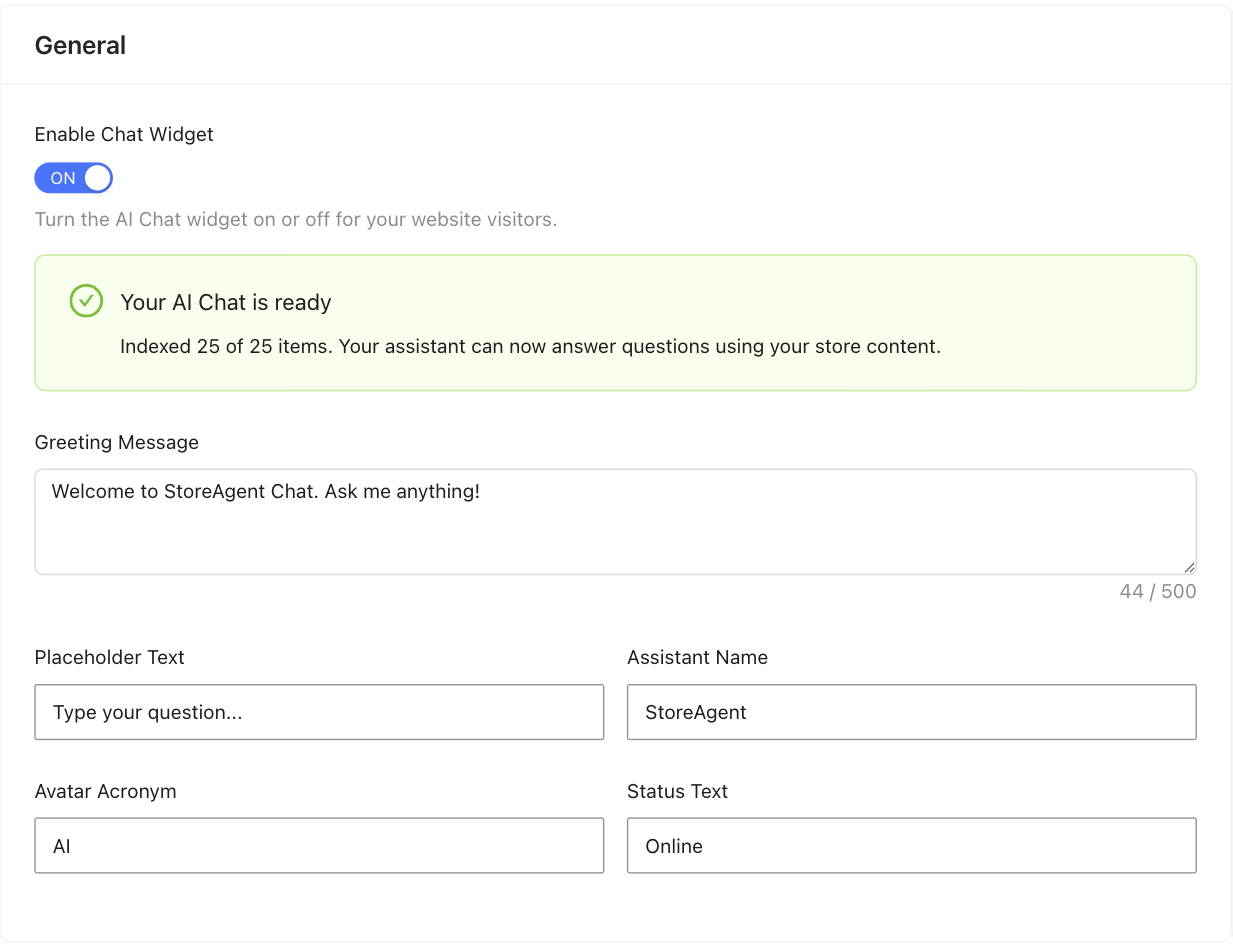
What Each AI Can Actually See In Your Store
Take one shopper message and route it through both tools: “Is the navy hoodie in size M in stock, and where’s my order from last week?”
Both handle the first half well, and this is where PurioChat earns its reviews. Its chat returns product cards with the image, the current price, the stock status and the star rating, and shoppers can filter by category, price band and rating. There’s an “Add to Cart” button on the card and a cart icon in the chat header, and the AI can drop items in the basket itself. On the order question it does a limited, read-only lookup and strips the personal data before anything reaches the model, so names, addresses, emails and phone numbers never leave your server. For a store that cares about where customer data goes, that design is a feature and not a compromise.
StoreAgent answers from indexed memory for the general question and then goes back to the store for the details that move. Variable product prices, stock, variation details and SKUs are fetched live at the moment the shopper asks, so StoreAgent’s WooCommerce AI chatbot doesn’t quote the figure you changed last week. The order half is looked up live too, and only ever for the signed-in shopper’s own order. Both lookups are read-only and stay inside your store.
A second thing caught me out early on with StoreAgent. The chat widget deliberately refuses to appear on the storefront until the first product index finishes, so I installed it, opened the shop in another tab and found no chat bubble at all. That’s intentional, and better than the alternative, but it does mean the first five minutes look like a broken install.
Two PurioChat limits are worth reading in its own documentation before you buy. Product cards and full filtering only work for WooCommerce products or Listeo theme listings. Other custom post types fall back to a keyword search with no filters at all. And its guidance on custom instructions admits the AI may auto-apply a rating filter of 4.5 and above on a request like “good headphones”, which returns nothing if your products have no ratings yet. The suggested fix is to write a rule into the prompt box yourself. That’s a reasonable ask of an agency. It’s a strange one for a shop owner who bought a chatbot.
What We’ve Seen: Store owners compare AI chatbots on the feature list, buy the cheapest one that ticks every box, then discover the tool moved a job onto them rather than off them. Sometimes it’s prompt engineering. Sometimes it’s an API bill, or a server that got slower. The question to ask before you buy isn’t “can this tool do X?” It’s “after this tool does X, who is still doing the work?”
How StoreAgent And PurioChat Pricing Compare
This is the sharpest split, and PurioChat wins the cash comparison. Saying otherwise would be dishonest. Here are StoreAgent’s plans, all billed monthly:
| Plan | Price | AI chat replies | Memory items | AI tasks |
|---|---|---|---|---|
| Lite | Free | 50 one-time | 1,000 | 25 one-time |
| Growth | $19/mo | 500 | 5,000 | 500 |
| Pro | $49/mo | 5,000 | 25,000 | 2,500 |
| Business | $249/mo | 50,000 | 100,000 | 10,000 |
Lite credits are one-time and don’t renew, so it’s a way to test the tool rather than run a busy store on it. Only the AI’s replies count against the quota, and customer messages don’t. Support Escalation starts on Growth, full chat history is listed on Pro and Business, and every paid plan runs on unlimited websites with a 14-day money-back guarantee.
PurioChat licenses per site, and its pricing widget offers the same tiers two ways, as a one-time payment or as a yearly one:
| Licence | Sites | One-time | Per year | AI usage |
|---|---|---|---|---|
| Free | 1 | $0 | $0 | Your own API key |
| Single | 1 | $69 | $59 | Your own API key |
| Multi | 3 | $109 | $99 | Your own API key |
| Agency | 10 | $249 | $169 | Your own API key |
| Agency | 25 | $449 | $249 | Your own API key |
Correct a likely misreading in PurioChat’s favour while we’re here: the $69 headline is the one-time option, and there’s a cheaper $59 yearly licence sitting behind the same toggle. Conversations are unlimited on every paid tier, and lifetime updates are included.
Here’s what the difference looks like in practice (example data, not a real store): a WooCommerce shop handling 600 chat conversations a month. On PurioChat that’s a $69 licence once, plus whatever the model costs. Using the vendor’s own estimate of about $5 per 3,000 messages on Gemini, and allowing a handful of messages per conversation, call it $35 to $60 of API spend across the year. Year one lands near $110. Year two is the API bill alone. On StoreAgent, 600 conversations a month needs the Pro plan at $49, so $588 a year with the AI included and no key to manage.
That gap is real and it’s large. What the difference buys is a managed model with no rate limit of your own to trip over, vector search that never touches your server, the content agents below, and reporting on what the chat actually earned. If none of that matters to your store, PurioChat is the cheaper tool and you should buy it. If you want to see the full set of line items that make up either number, we broke down what an AI chatbot actually costs separately.
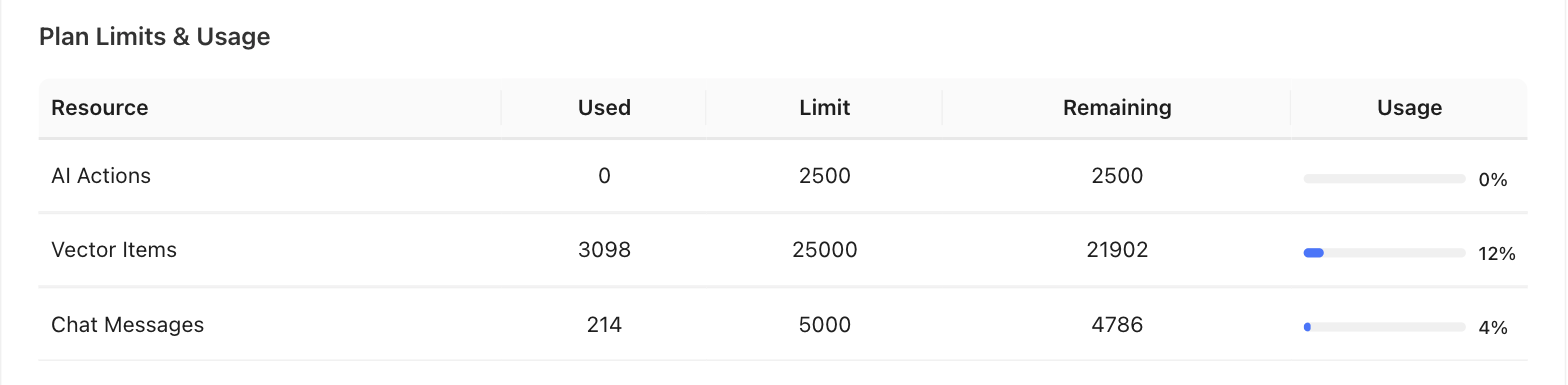
Beyond Support: What Else Each Tool Does
PurioChat’s breadth runs outward, into channels. It deploys to Telegram and WhatsApp, connects to n8n, Zapier and Make through webhooks, accepts image uploads and voice messages from visitors, and fires proactive messages based on time on page or scroll depth with a pre-chat form to capture the contact. Baymard Institute puts the average documented cart abandonment rate at 70.22% across 50 studies, so a tool that opens a conversation before the visitor leaves is aimed at a genuinely large number.
StoreAgent’s breadth runs downward, into the store itself. Alongside the chatbot it ships a set of AI content agents that work on your catalogue: product descriptions and short descriptions, product tags, category descriptions, image alt text, review summaries, review moderation, upsell and cross-sell suggestions, coupon descriptions and product Q&A. You can run any of them on one product, on a sample, or in bulk from the products list or through WP-CLI, and each shows its credit cost before it commits. That’s WooCommerce AI content generation included in the same plan as the chat, not a second subscription.
Reporting is the clearest split of all. PurioChat’s Chat Insights reads the conversations and surfaces summaries, knowledge gaps, sentiment and suggested actions, which is useful, and all of it is about the chat. StoreAgent’s AI-powered store insights report on the store: KPI cards for revenue, conversion rate, chats and impressions, and a funnel that runs from “Saw the widget” through “Opened the chat” and “Added to cart” to “Purchased”. They also flag listings with content gaps and offer a one-click AI fix. One tool tells you how the chat is doing. The other tells you what it earned.
On connecting an outside assistant, PurioChat is ahead today and it would be dishonest to pretend otherwise. Its MCP connection ships now, and it lets ChatGPT or Claude create and update pages, posts, custom post types, products, comments and media under permissions you set and can revoke. StoreAgent has 24 WooCommerce AI abilities registered through the WordPress Abilities API, and the managed WooCommerce MCP connection that exposes them publicly is still marked coming soon with a waitlist. If driving your store from Claude is the thing you’re buying, PurioChat can do it this afternoon and StoreAgent can’t.
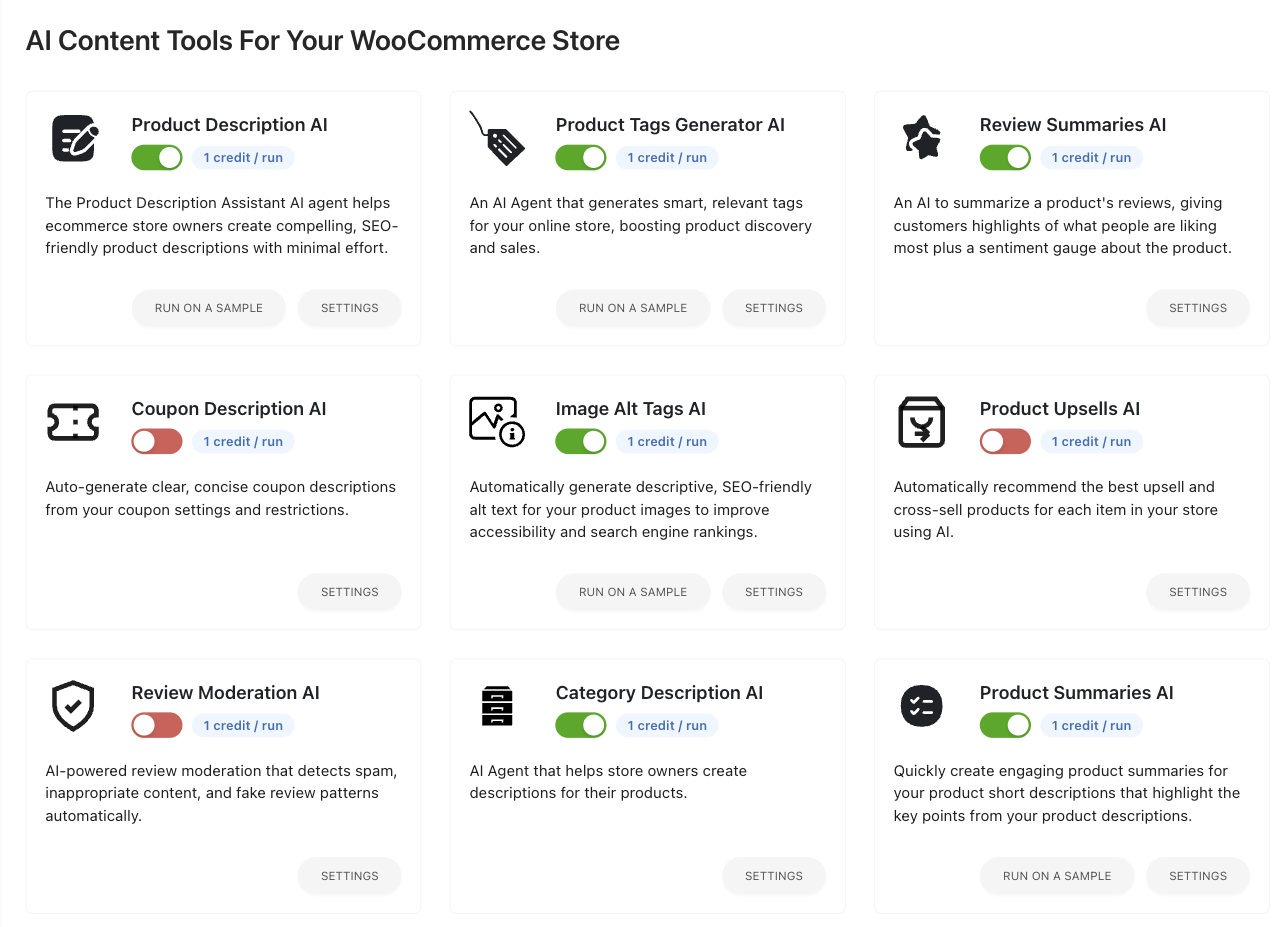
Where PurioChat Is Genuinely Strong
PurioChat is a well-built product and it would be silly to suggest otherwise. PureThemes has been shipping WordPress themes and plugins since 2012, and it’s a two-person studio that supports its own work, which shows in the review wall. The WooCommerce integration is the real thing rather than a synced export: semantic product search, product comparison, cards with live stock and ratings, price and rating filters, cart actions the AI can perform itself, and read-only order lookups with the personal data stripped before it reaches a model. It trains on pages, posts, products, custom post types, external pages and PDFs. It brands cleanly, embeds inline or as a bubble, and runs on any theme. And you can pick your own model across OpenAI, Gemini, Mistral or anything OpenRouter fronts, which is genuine control that a managed service takes away from you.
One procurement note rather than a criticism: PurioChat has no wordpress.org listing. I checked the plugin API on 2026-09-01 and it returns “Plugin not found” for the obvious slugs, with no results for PureThemes as an author. Both the free and paid versions come straight from purethemes.net. That’s a legitimate way to sell software, and plenty of good plugins do it, but it does mean there’s no independent install count, rating or review history to audit before you commit.
Now the honest counterweight, because you should hear it from us rather than find out later. StoreAgent is not a multichannel helpdesk. There’s no human-agent inbox, no SMS, no voice, no WhatsApp or Messenger, and shoppers can’t send images or voice notes into the chat. PurioChat has all of that, and its shared team inbox with browser, email and Telegram alerts is a real support workflow that StoreAgent has no answer to.
What StoreAgent does instead is hand off. When a shopper asks for a person, the AI collects their email and sends your team a written summary of the conversation with the full transcript, using the customer’s address as the reply-to. Replying to that email goes straight back to the shopper rather than into a ticket queue. That’s a faster human, not a helpdesk, and it’s worth knowing which one your store needs. If you’d rather see how we compare against the multichannel tools, the other StoreAgent comparisons cover them.
Frequently Asked Questions
Does PurioChat work with WooCommerce?
Yes. PurioChat is a WordPress plugin with a native WooCommerce integration, so its AI reads your real catalogue rather than a synced copy. It does semantic product search, shows product cards with price, stock and ratings, filters by category, price and rating, adds items to the cart from chat, and checks order status read-only.
How large a catalogue can PurioChat handle?
PurioChat’s own documentation says it is optimised for up to a few thousand items, pages or products. The reason is architectural: MySQL has no native vector search, so PurioChat runs every similarity calculation in PHP on your server, and search speed depends on your CPU and index size. Larger catalogues need a vector store that isn’t your web host.
Is StoreAgent a full helpdesk?
No, and that’s deliberate. StoreAgent has no human-agent inbox, no SMS and no voice channel, and it doesn’t accept image or voice messages from shoppers. When a conversation needs a person, it emails your team a summary and the transcript with the customer set as the reply-to, so you answer from your inbox instead of a queue.
How much does StoreAgent cost compared to PurioChat?
StoreAgent runs $19, $49 or $249 a month with the AI included and no API key, plus a free Lite plan, and every paid plan covers unlimited websites. PurioChat is $69 once or $59 a year for one site, plus your own model bill, which the vendor estimates at about $5 per 3,000 messages. PurioChat is cheaper in cash.
Can I try StoreAgent before paying?
Yes. The Lite plan is free and includes 50 one-time AI chat replies, 25 one-time AI tasks and 1,000 memory items, with no API keys to configure and no credit card. Paid plans also carry a 14-day money-back guarantee, so you can run a real month on real traffic and reverse it.
Which AI Is Right For Your WooCommerce Store?
StoreAgent, for most stores that intend to get bigger, and PurioChat for a small catalogue where the one-time price is the point. This is a closer matchup than most of the tools we compare against, because PurioChat got the WooCommerce part right. It just asks you to run the AI infrastructure, own the model bill and do the content work yourself, and those costs land later than the licence does.
Here’s what to do with all this:
- Count your products, pages and posts before you compare anything else, because a few thousand is the line PurioChat draws itself
- Check which answers come from a live read rather than an index, since prices and orders are what shoppers ask about
- Add the model bill to the licence, then compare two years rather than one
- Decide whether you want more channels or more of the store automated, because that single choice picks the winner here
- Work out whether you need a human inbox, and buy PurioChat if the answer is yes
If you run a WooCommerce store and want AI that reads your real catalogue and your real orders without a server to tune or a key to top up, StoreAgent is built for exactly that. Start free on StoreAgent Lite and see what it answers before you spend anything.
Sources
- Baymard Institute, Cart Abandonment Rate Statistics – Supports: “average documented cart abandonment rate at 70.22% across 50 studies”
Note: PurioChat’s WooCommerce capabilities, PHP-based vector search caveat and catalogue guidance, licence prices for both the one-time and yearly options, API-key cost estimates and provider rate limits were verified directly against PureThemes’ own live product page and its published WooCommerce comparison article on 2026-09-01, and the absence of a wordpress.org listing was verified against the WordPress.org plugin API the same day. StoreAgent plan pricing, quotas, AI Memory architecture, live lookup behaviour, escalation behaviour and MCP availability were verified against the live StoreAgent pricing page, knowledge base and plugin readme the same day. Per the competitor linking policy, PureThemes and PurioChat pages are named in prose but deliberately not linked.