

 Reviewed by
Understanding your target audience age changes everything about how you sell. Different age groups speak different languages, trust different sources, and buy in different ways.
Here’s the thing: if you write product descriptions for everyone, you reach no one. The words that work for Gen Z will confuse Baby Boomers.
This guide explains the four main age groups and how to sell to each one.
Quick Comparison: Age Groups And Shopping Behaviors
| Age Group | Birth Years | Key Shopping Behavior | Preferred Tone |
|---|---|---|---|
| Gen Z | 1997–2012 | Mobile-first, values authenticity | Casual, direct |
| Millennials | 1981–1996 | Research-heavy, seeks reviews | Conversational, informative |
| Gen X | 1965–1980 | Values quality and efficiency | Professional, straightforward |
| Baby Boomers | 1946–1964 | Prefers detailed info, trusts brands | Formal, reassuring |
Table of Contents
- What Is Target Audience Age?
- Target Market Age Vs Target Audience Age
- What Are The 4 Main Age Demographics (And How To Sell To Each)
- How To Find Your Target Audience Age
- Why Target Audience Age Matters For WooCommerce Stores
- How StoreAgent's WooCommerce AI Tool Helps Stores Target Different Age Groups
- Why I Recommend Using AI For Age-Specific Content
- Conclusion
- Frequently Asked Questions
What Is Target Audience Age?
Target audience age refers to the specific age range of people most likely to buy your products. In other words, it’s one of the core demographic factors in marketing.
Here’s why it matters: according to Statista, the 25-34 age group makes up nearly 28% of visitors to major online stores like Amazon. Meanwhile, 80% of Gen Z does their shopping online, compared to just 55% of Baby Boomers.
This shows that different age groups have different values, use different words, and trust different things.
For example, a product description that works for a 25-year-old may confuse a 60-year-old. Consequently, age affects everything from tone to trust signals.
Target Market Age Vs Target Audience Age
These terms sound similar, but they mean different things. Understanding the distinction helps you focus your marketing efforts more effectively.
Target market age is broader. Specifically, it refers to the entire group of potential buyers who could use your product. Think of it as everyone who might be interested.
For example, let’s say you sell running shoes. Your target market age might be anyone between 18 and 65 years old. After all, people in that entire range could potentially buy running shoes.
On the other hand, target audience age is more specific. It focuses on the segment you’re actively marketing to right now. This is where your current campaigns, ads, and content are aimed.
Going back to the running shoes example: you might decide to focus your current marketing campaign on Millennials aged 27-40. They’re your target audience age right now. However, this doesn’t mean Gen Z or Gen X can’t buy from you.
Here’s another way to think about it: your target market is everyone who could buy. Your target audience is who you’re trying to reach today.
What Are The 4 Main Age Demographics (And How To Sell To Each)
1. Gen Z (Born 1997–2012)
First, let’s talk about Gen Z shoppers. They grew up with smartphones, which means they’re digital natives who expect instant answers.
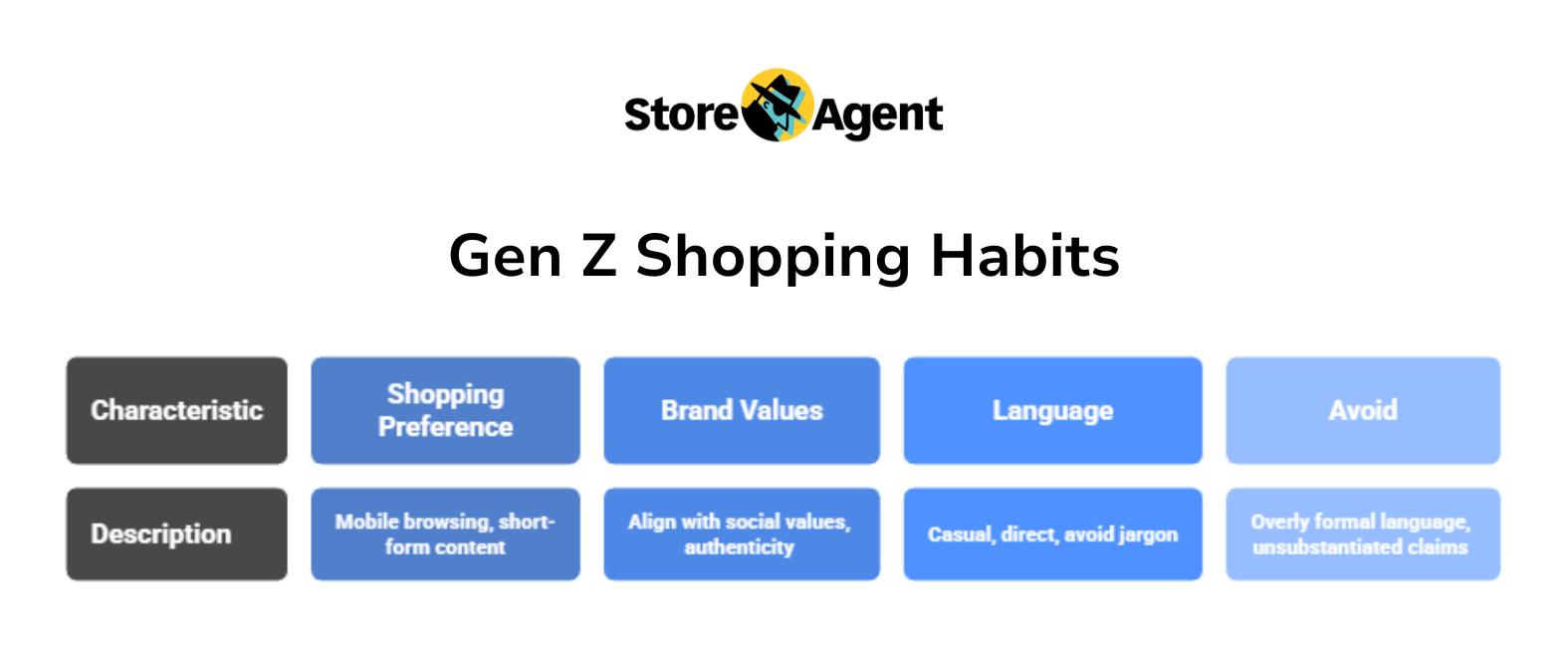
How They Shop
They prefer mobile browsing and short-form content. Moreover, they value brands that align with their social values. In fact, authenticity matters more than polish to this group.
Language Tips
Use casual, direct language. However, avoid corporate jargon. For instance, phrases like “vibe,” “aesthetic,” and “no cap” resonate with this group.
What To Avoid
Don’t use overly formal language. Also, don’t make claims without proof. Why? Because they can smell fake marketing from a mile away.
2. Millennials (Born 1981–1996)
Next up, we have Millennials. They’re research-driven shoppers who compare prices, read reviews, and value transparency.
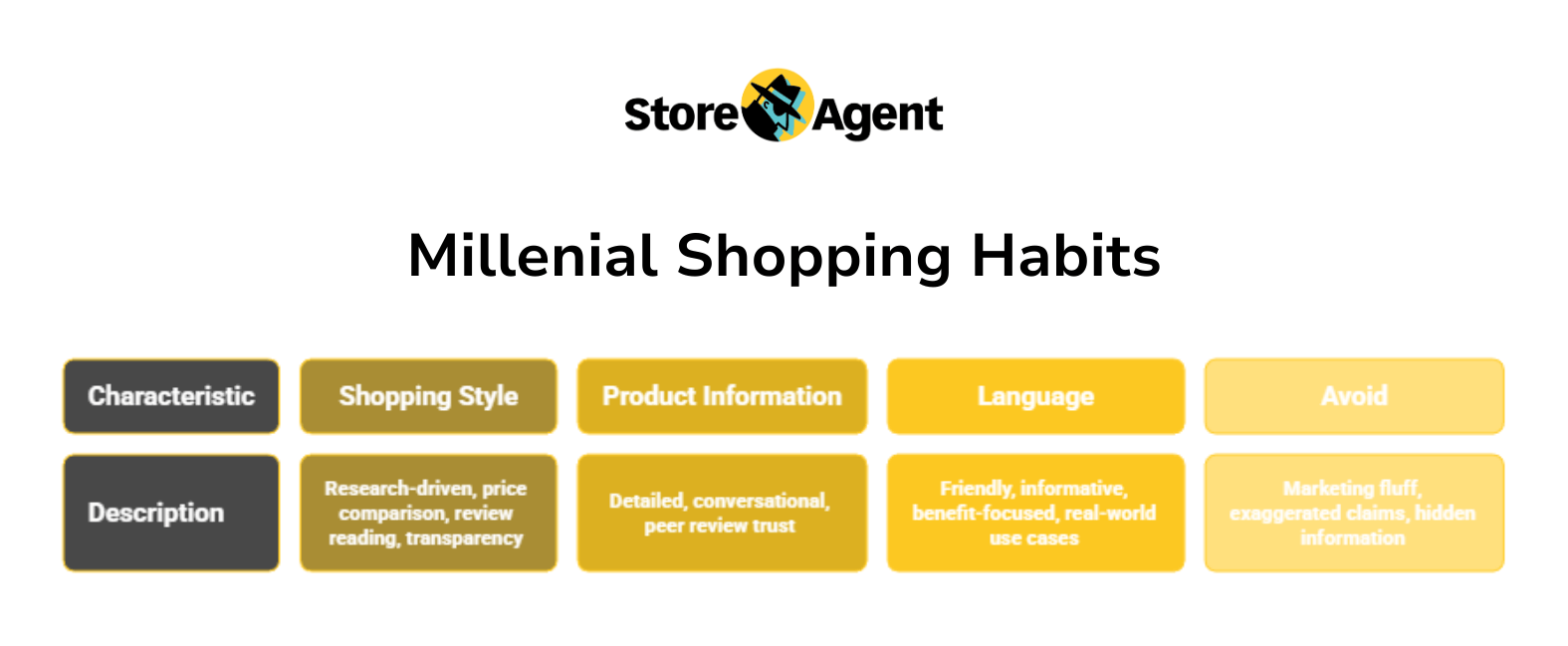
How They Shop
They appreciate detailed product information. However, they want it presented in a conversational way. Furthermore, they trust peer reviews over brand claims.
Language Tips
Use a friendly, informative tone. Besides that, include specific benefits and real-world use cases. Always answer the question “How will this make my life better?”
What To Avoid
Don’t hide information behind marketing fluff. Similarly, don’t make exaggerated claims. Remember, they’ll fact-check you.
3. Gen X (Born 1965–1980)
Moving on to Gen X. They value efficiency and quality. Although they’re brand-loyal, they’re willing to switch if a competitor offers better value.
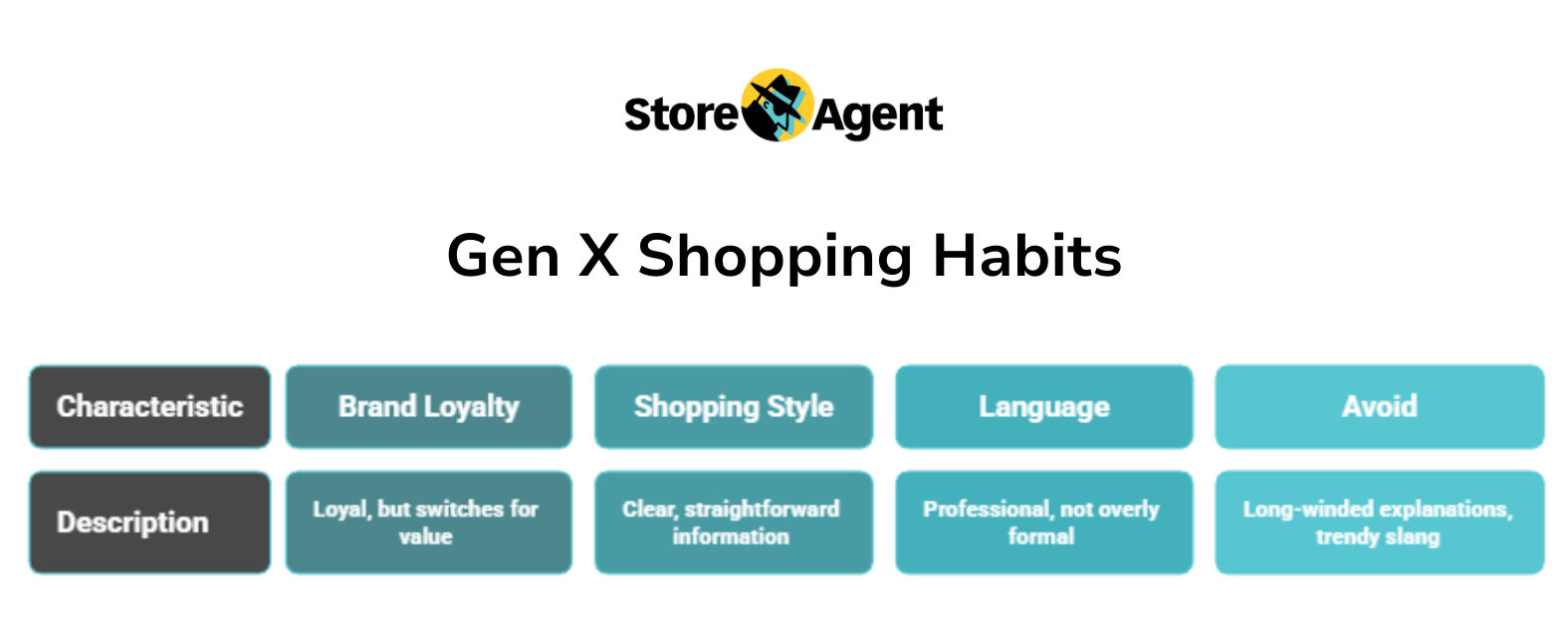
How They Shop
They want clear, straightforward information. In other words, they don’t have time for fluff. Simply show them the value and let them decide.
Language Tips
Be professional but not overly formal. Instead, focus on quality, durability, and value. Additionally, use bullet points for easy scanning.
What To Avoid
Don’t waste their time with long-winded explanations. Also, don’t use trendy slang. Keep it professional instead.
4. Baby Boomers (Born 1946–1964)
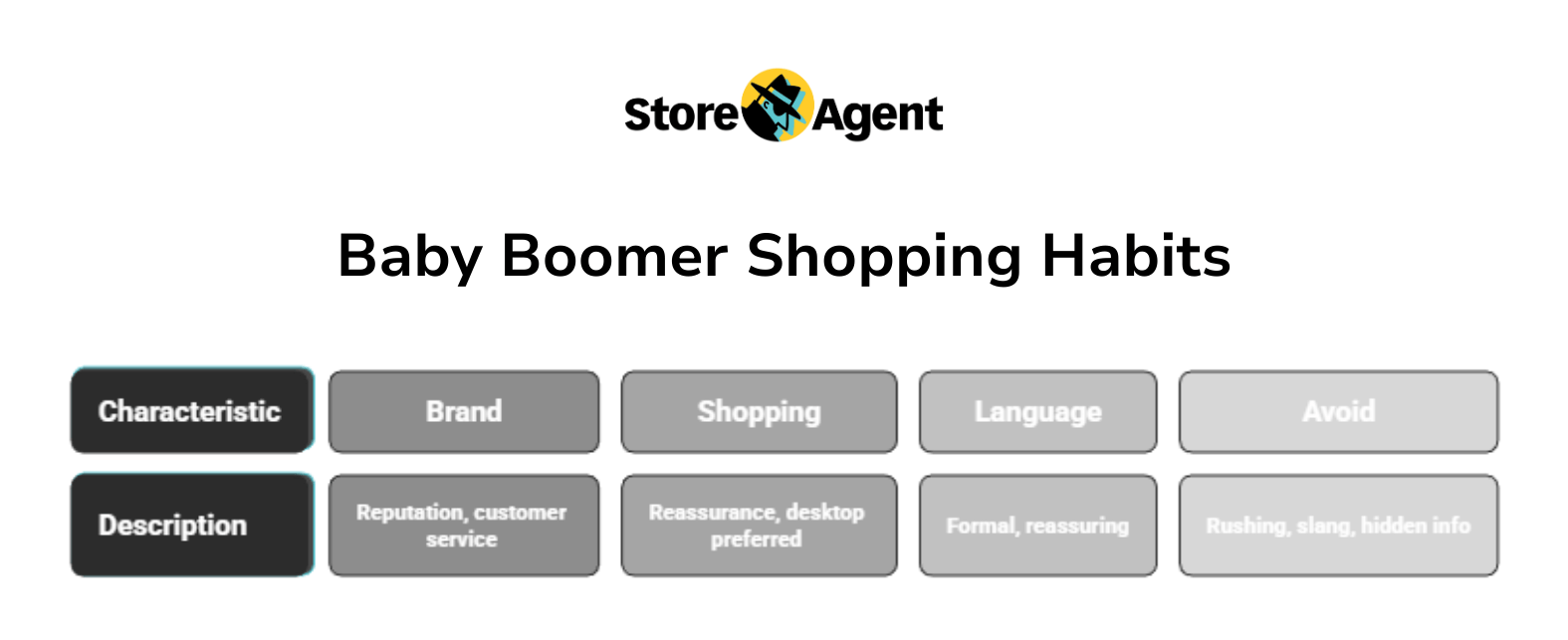
Finally, let’s discuss Baby Boomers. They prefer detailed, trustworthy information. In addition, they value brand reputation and customer service.
How They Shop
They want reassurance before making a purchase. Therefore, they’re less comfortable with mobile shopping. Consequently, desktop experiences work better for this group.
Language Tips
Use formal, reassuring language. For example, highlight guarantees, warranties, and customer support. Build trust through authority.
What To Avoid
Don’t rush them. Similarly, don’t use casual slang. Above all, don’t hide contact information or return policies.
How To Find Your Target Audience Age
Knowing your target audience age starts with collecting the right data. Here are four practical ways to find out who’s actually buying from you.
1. Use analytics
First, Google Analytics shows the age breakdown of your site visitors. Simply look at the “Demographics” section under “Audience.”
2. Survey your customers
Alternatively, send a simple survey asking for age range. Offer a discount code as an incentive. As a result, you’ll get honest data.
3. Check social media insights
Meanwhile, Facebook and Instagram provide age demographics for your followers. Plus, this data is free and accurate.
4. Review your competitors
Finally, look at who follows and engages with your competitors. For instance, tools like SimilarWeb can show audience demographics.
Why Target Audience Age Matters For WooCommerce Stores
Your target audience age directly impacts how you communicate across every part of your store. Here’s how age affects your most important marketing channels.
1. Product descriptions
Here’s an example: a skincare product for Gen Z needs different language than one for Baby Boomers. Gen Z wants “glow-up” language, whereas Boomers want “anti-aging science.”
In fact, the same product can have two different descriptions. Each one speaks to a specific target market age.
2. Email marketing
Similarly, subject lines should match your audience’s age. Younger audiences respond to emojis and urgency. On the other hand, older audiences prefer clarity and trust signals.
3. Ad targeting
Furthermore, Facebook and Google Ads let you target by age. Therefore, knowing your target audience age ensures your ad budget goes to the right people.
How StoreAgent’s WooCommerce AI Tool Helps Stores Target Different Age Groups
Most store owners don’t have time to write multiple versions of every product description. However, speaking to the right age group is critical for conversions.
Fortunately, StoreAgent’s AI tools solve this problem.
1. Age-focused product descriptions
StoreAgent’s WooCommerce AI Product Description Tool, part of its WooCommerce AI agent, includes an “Age Focus” setting.
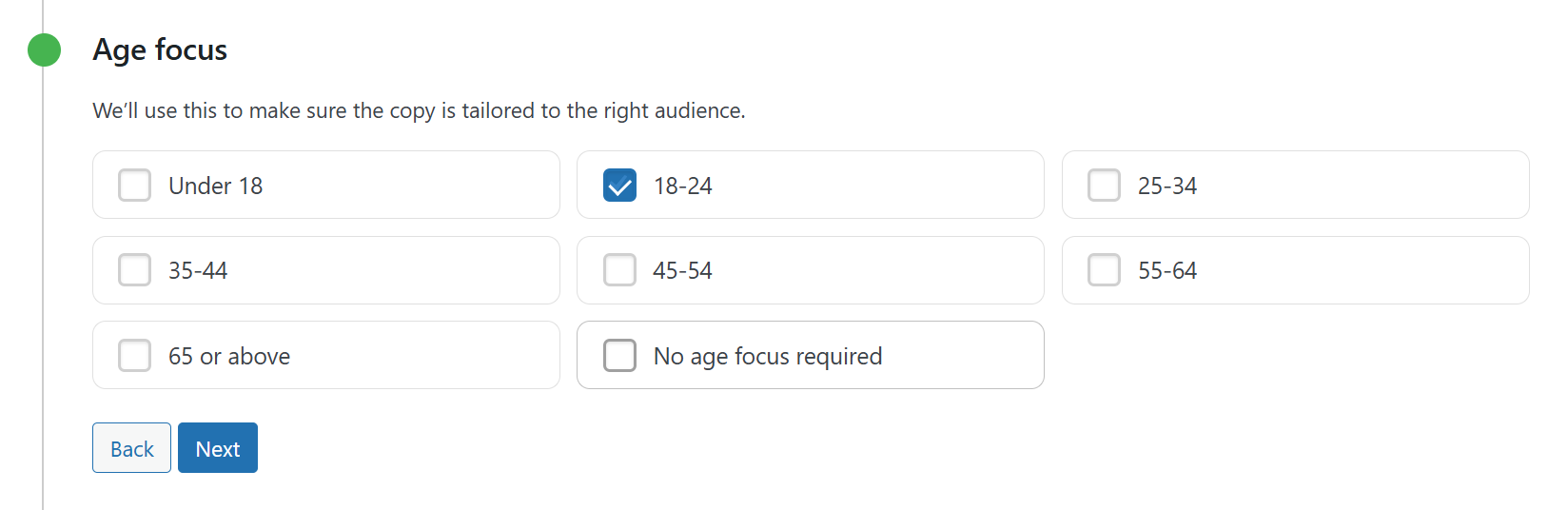
Specifically, you can select specific age ranges:
- Teens (13-17)
- Young Adults (18-24)
- Adults (25-54)
- Seniors (55+)
As a result, the AI adjusts vocabulary automatically. It changes sentence structure. Moreover, it shifts selling points to match what matters most to that age group.
2. Tone customization
Beyond age, you can also customize the tone of your descriptions. For instance, choose from options like:
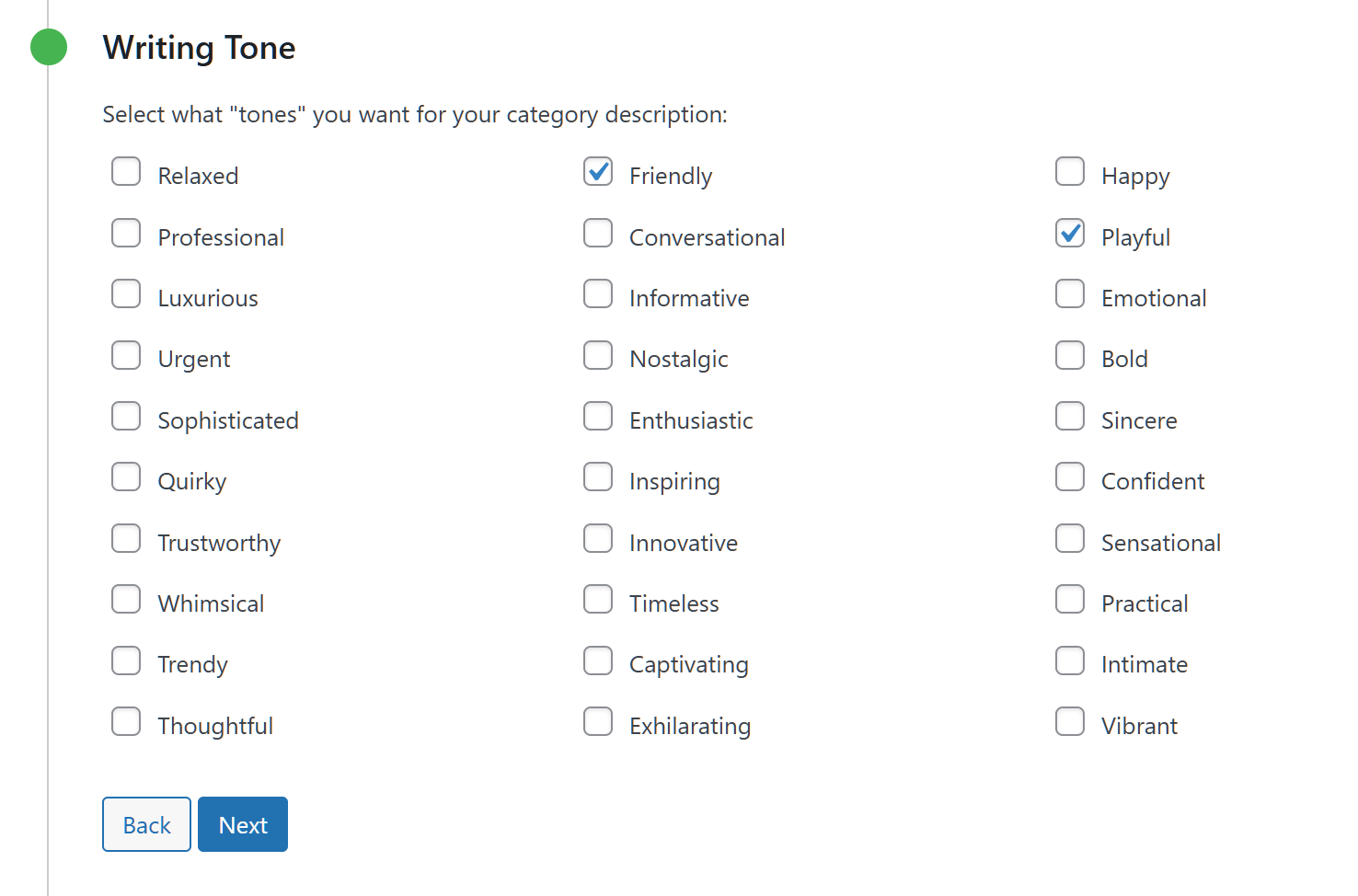
- Casual
- Professional
- Friendly
- Authoritative
Therefore, this ensures your copy matches both your target audience age and your brand voice.
3. Short descriptions that convert
Meanwhile, the StoreAgent Short Description Generator creates age-appropriate summaries. For example, for Gen Z, it uses trending language. For Boomers, it emphasizes trust and quality.
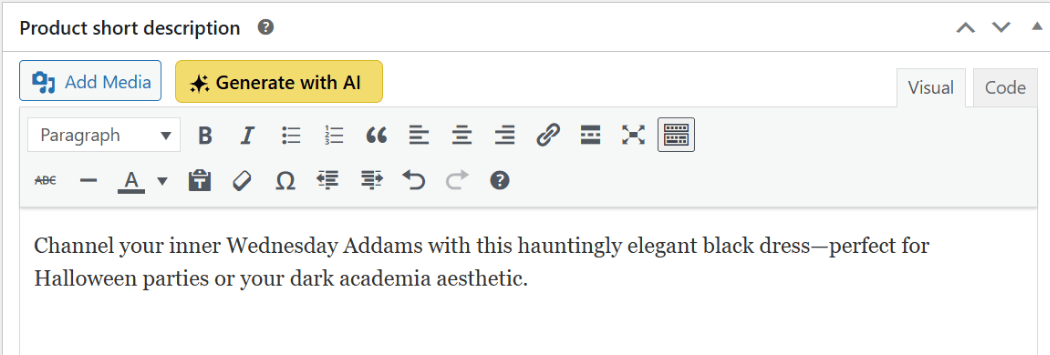
These short descriptions appear in search results. In addition, they show up on category pages. Consequently, getting the tone right here can be the difference between a click and a scroll.
4. SEO Product Descriptions
With SEO Product Descriptions, you optimize for keywords your target market age actually searches for. Here’s why that matters: younger audiences search differently than older ones.
For instance, Gen Z might search “cute crop top aesthetic.” However, Baby Boomers might search “comfortable cotton t-shirt.” Fortunately, the AI helps you write for both.
5. Category descriptions
Finally, the Product Category Description AI helps you set the tone for entire product categories. For example, if your pet supplies category targets Millennials, the AI writes conversational, benefit-focused copy.
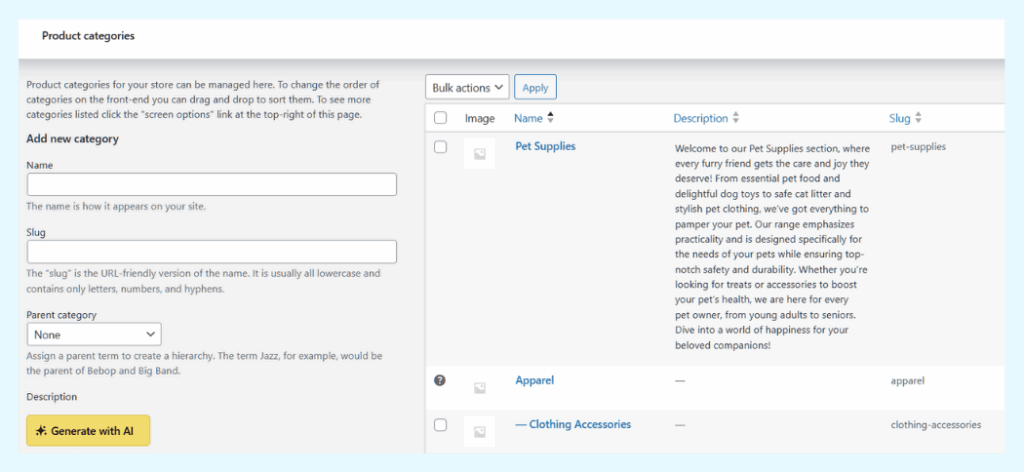
As a result, this saves hours of manual work.
Why I Recommend Using AI For Age-Specific Content
I tested StoreAgent’s age-targeting features on a demo store. Specifically, I created two versions of the same product description for a moisturizer.
Version 1: Gen Z Focus
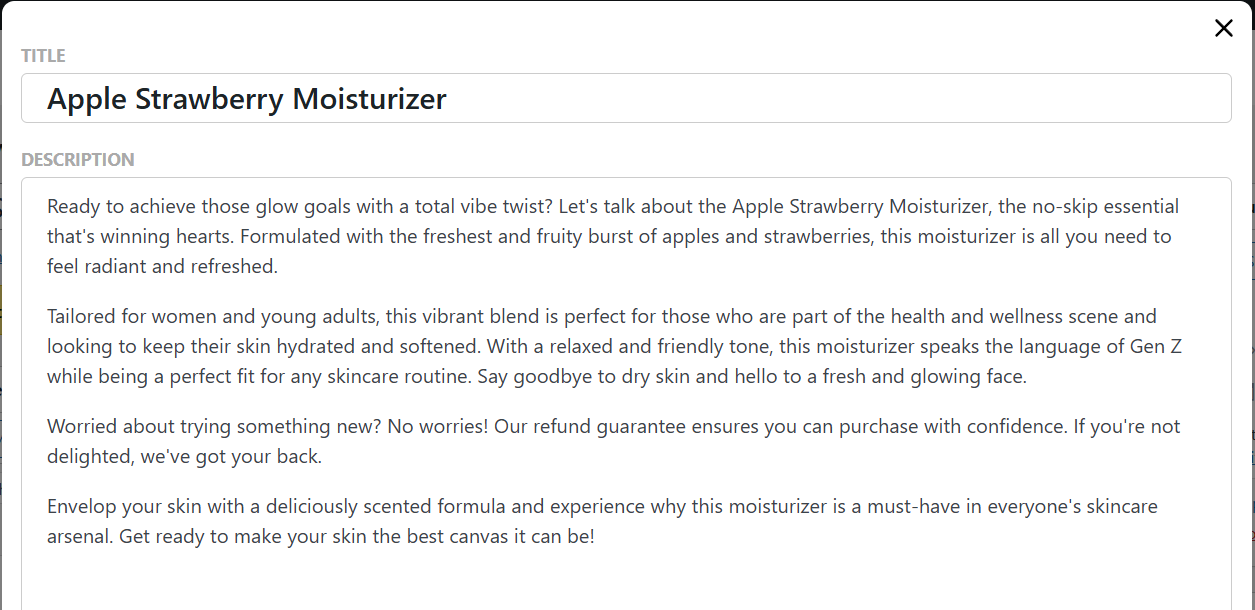
The AI used phrases like “total vibe,” “glow goals,” and “no-skip essential.” The tone was casual and direct. In fact, it felt like advice from a friend.
Version 2: Baby Boomer Focus
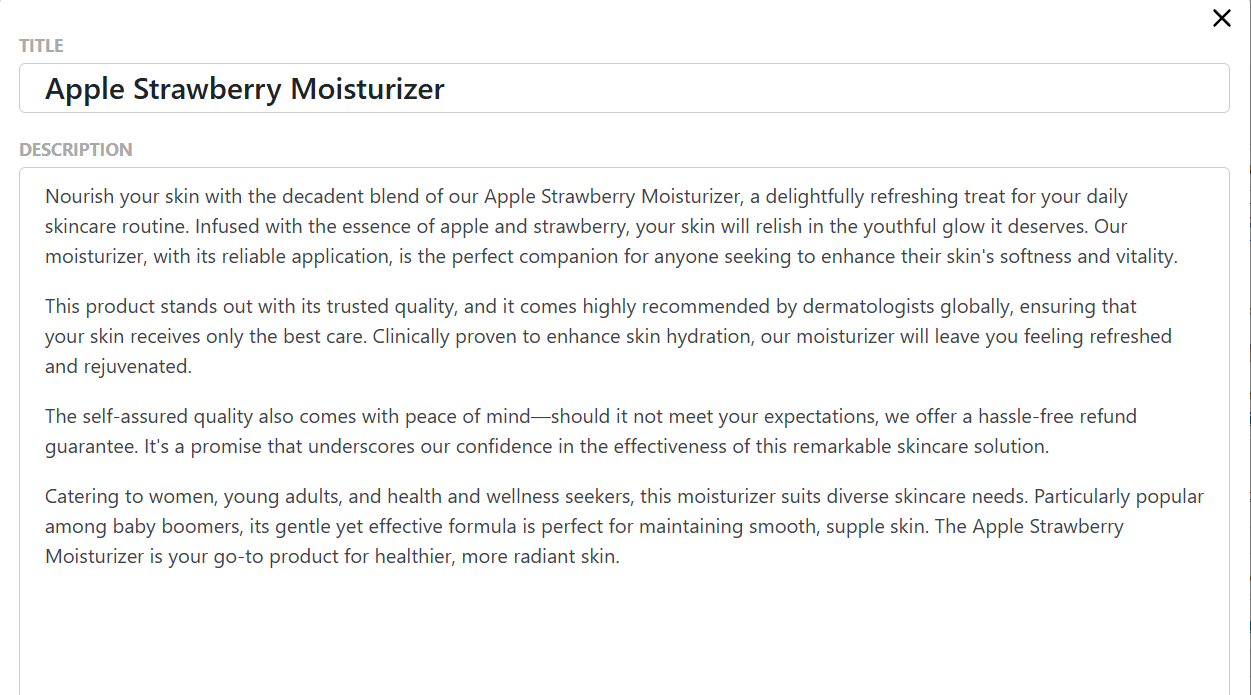
On the other hand, the AI emphasized “trusted quality,” “clinically proven,” and “dermatologist recommended.” The tone was formal and reassuring. It felt like advice from an expert.
Here’s the best part: both versions took less than 2 minutes to generate. I didn’t need to rewrite anything manually.
Simply put, the AI understood the assignment.
Conclusion
Getting your target audience age right is one of the simplest ways to improve your conversion rate. When you write for everyone, you connect with no one. When you write for a specific age group, your message becomes clearer and more persuasive.
In this guide, we covered:
- What target audience age means and why it differs from target market age
- The 4 main age demographics and how each one shops differently
- How to find your target audience age using analytics, surveys, and competitor research
- Why age matters for WooCommerce stores across product descriptions, emails, and ads
- How StoreAgent helps you create age-specific content in minutes instead of hours
Ready to write product descriptions that actually connect with your customers? Try StoreAgent’s AI content tools today and see how easy it is to match your messaging to your audience.
Frequently Asked Questions
1. What are the age brackets for target audience?
The most common target audience age brackets are Gen Z (13-26 years old), Millennials (27-43 years old), Gen X (44-59 years old), and Baby Boomers (60-78 years old).
2. How do I find my target audience age?
First, use Google Analytics to see visitor demographics. Alternatively, survey your customers directly with a simple age question. Finally, check social media insights for follower age data.
3. What is target market age vs target audience age?
Target market age is the broader age range of potential buyers. In contrast, target audience age is the specific segment you’re focusing your marketing efforts on right now.
4. Can I target multiple age groups at once?
Yes. However, you’ll need to create separate product descriptions or landing pages for each age group. Fortunately, you can use AI tools like StoreAgent to speed up the process and maintain consistency.
5. Does target audience age affect SEO?
Yes, indirectly. Different age groups search using different keywords. For example, younger audiences use slang and short phrases. Meanwhile, older audiences use complete questions. Therefore, optimize for both.