

 Reviewed by
Culinary marketing uses food memories and sensory experiences to create emotional connections with customers. It’s more important than ever as the global food and beverage market will reach $7.04 trillion in 2025.
Here’s what separates thriving food businesses from struggling ones.
Thriving brands tell compelling origin stories. They showcase farm-to-table journeys and chef expertise. They turn meals into shareable social moments. Struggling brands simply list menu items and hope customers buy.
This guide covers 10 culinary marketing strategies that actually drive sales. First, you’ll learn tactics used by successful restaurants, meal kit services, and specialty food brands.
If you run a WooCommerce food store, you’ll also discover how to use StoreAgent, a WooCommerce AI Plugin, to automate content and customer support.
Table of Contents
- What Is Culinary Marketing?
- Quick Reference Table
- 10 Culinary Marketing Strategies To Grow Your Food Brand
- 1. Define your brand positioning
- 2. Optimize your product packaging & visual identity
- 3. Master Instagram & TikTok food content
- 4. Leverage user-generated content
- 5. Create your unique selling point (USP)
- 6. Partner with complementary brands
- 7. Host local events & experiences
- 8. Write product descriptions that sell the experience
- 9. Provide 24/7 customer support for food questions
- 10. Launch a loyalty program that rewards actions
- Bonus Tip: Add Wishlist functionality to your online store
- Start Implementing These Culinary Marketing Strategies Today
- Frequently Asked Questions
- 1. How much budget do I need for culinary marketing strategies?
- 2. How long does it take to see results from culinary marketing?
- 3. What are the biggest culinary marketing mistakes food brands make?
- 4. Do I need a large social media following to start culinary marketing?
- 5. Can I use culinary marketing for both restaurants and food ecommerce stores?
- 6. Should I hire a food marketing agency or use AI tools first?
What Is Culinary Marketing?
Culinary marketing promotes food and beverage products through storytelling, visuals, and customer experiences. Unlike traditional food marketing that lists ingredients and nutrition facts, it sells memories, emotions, and lifestyle aspirations instead.
For example, Chipotle doesn’t just sell burritos. Instead, they market sustainable farming practices and supply chain transparency.
Similarly, Ben & Jerry’s doesn’t just sell ice cream. They market social justice and environmental activism through flavor names and campaigns.
The health and wellness food market is growing to $627.6 billion by 2029. Consumers now want functional benefits, not just “healthy” claims. In fact, 43% of consumers want healthy foods that boost energy or performance. Consequently, this shift makes culinary marketing strategies more important than ever.
Quick Reference Table
| Strategy | Effort | Impact | Best For | Results |
|---|---|---|---|---|
| Brand Positioning | High | High | All brands | 3-6 months |
| Product Packaging | Medium | High | Product brands | 1-2 months |
| Instagram & TikTok | High | High | Visual brands | 1-2 months |
| User-Generated Content | Low | High | Community brands | 2-4 weeks |
| Unique Selling Point | Medium | High | All brands | 1-3 months |
| Brand Partnerships | Medium | Medium | Growing brands | 2-4 months |
| Local Events | High | Medium | Restaurants | 1-3 months |
| Product Descriptions (+AI) | Low | High | WooCommerce | Minutes |
| 24/7 Support (+AI Chatbot) | Low | High | WooCommerce | Hours |
| Loyalty Programs | Low | High | Repeat customers | 2-3 months |
10 Culinary Marketing Strategies To Grow Your Food Brand
These culinary marketing strategies blend proven tactics with modern technology. As a result, they help your food brand stand out from competitors.
1. Define your brand positioning
Brand positioning is how customers recognize and remember your food brand. It sets you apart from competitors in meaningful ways.
First, identify your unique values clearly. Are you health-focused? Sustainable? Comfort food? Budget-friendly gourmet? This decision then guides every marketing choice you make.
For example, Impossible Foods positions as “meat for meat lovers, made from plants.” This speaks to carnivores, not vegetarians.
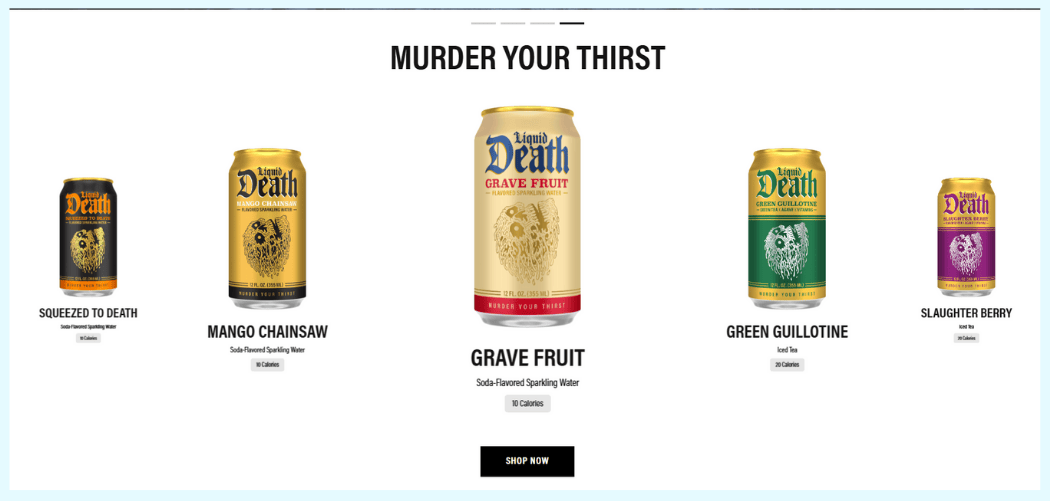
Likewise, Liquid Death markets water as “murder your thirst” with skull imagery. Consequently, they turned boring bottled water into a lifestyle brand.
Your brand positioning should appear consistently across packaging, social media, website, and customer service. Otherwise, mixed messages confuse customers and weaken your identity.
2. Optimize your product packaging & visual identity
Packaging sells the product before taste does. In fact, customers judge food quality by visual presentation first.
However, product packaging includes more than physical wrappers. It also encompasses your logo, menu design, brand colors, fonts, and overall aesthetic. Together, these elements create brand recognition.
Refresh your brand image every few years to stay current and attract new customers.
3. Master Instagram & TikTok food content
Visual platforms drive food discovery and purchase decisions. In fact, 88% of restaurants now use social media for marketing.
Use Reels for recipe videos and behind-the-scenes content. Next, use Stories for daily specials and polls. Finally, use Highlights to organize menu items and customer reviews.
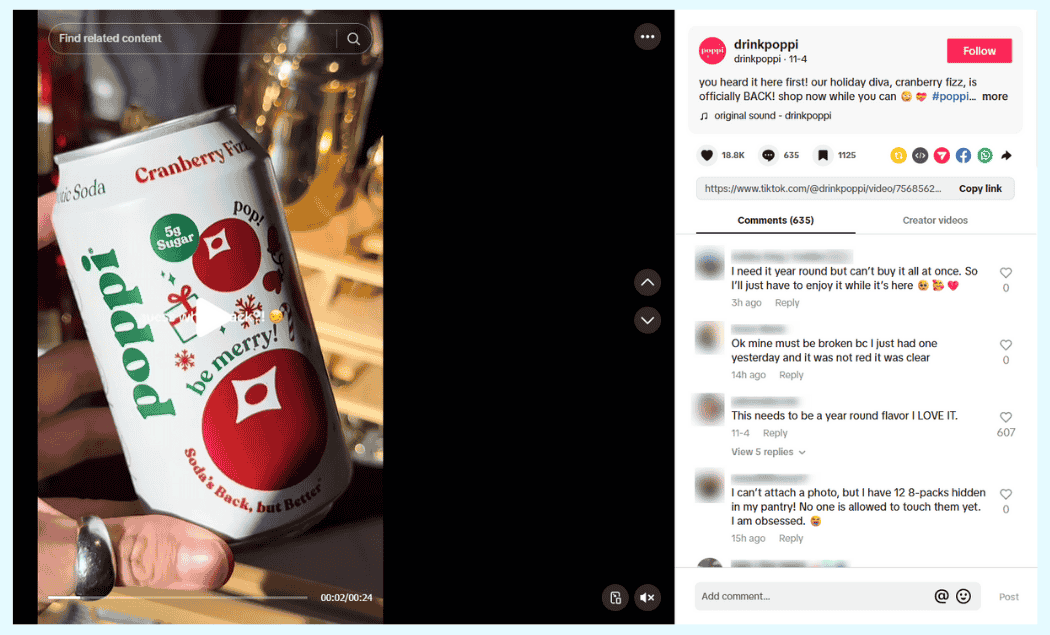
For example, Poppi, a prebiotic soda brand, grew exponentially through TikTok. They created lifestyle content showing young people drinking Poppi throughout their day. However, they didn’t focus on product features. They sold a wellness lifestyle.
Post one to three times daily for consistent reach. Additionally, use trending sounds and hashtags. Show food preparation processes as well. The more authentic and unpolished, the better engagement you’ll get.
4. Leverage user-generated content
User-generated content builds trust while providing authentic marketing materials at low cost. In fact, real customer photos often convert better than professional food photography.
Run contests rewarding the best submissions with prizes or store credit. Ideas include best meal styling, creative photography, or recipe transformations. Then, feature winning content on your website and social media channels.
5. Create your unique selling point (USP)
Your unique selling point differentiates you from every competitor. Unfortunately, generic claims like “fresh ingredients” or “great taste” don’t work anymore.
Instead, be specific and verifiable. If your chocolate chip cookies won a contest, say “Award-winning recipe, 1st place Texas State Fair 2019.”
Likewise, if you give back locally, quantify it: “We’ve donated 10,000 meals to local food banks since 2020.”
Your USP should be creative, memorable, and true. Furthermore, it should answer the question: “Why should I buy from you instead of anyone else?” Therefore, make this prominent in all food marketing strategies.
6. Partner with complementary brands
Cross-promotions expand your reach to new audiences through trusted partners. However, choose brands that share your values but don’t compete directly.
For example, a café can partner with a local bakery for pastries. Likewise, a vegan restaurant can collaborate with an animal sanctuary for events.
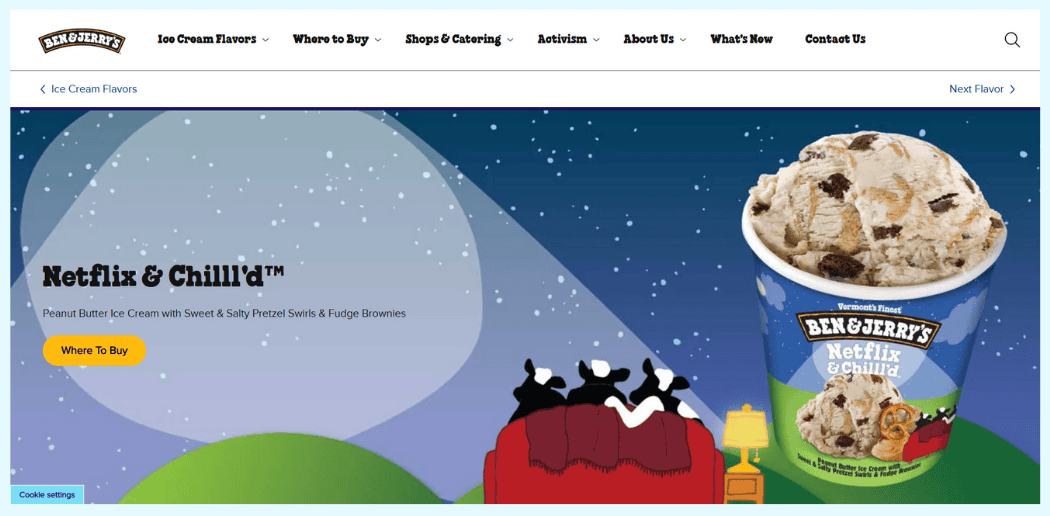
Ben & Jerry’s partners with Netflix for limited-edition ice cream flavors like “Netflix & Chilll’d.” This collaboration exposes both brands to each other’s audiences. Moreover, it creates buzz through novelty and cultural relevance.
Look for partners in your community first. After all, local collaborations feel more authentic and build stronger customer relationships than corporate partnerships.
7. Host local events & experiences
Events generate revenue while building community connections and brand loyalty. Additionally, they create memorable experiences customers share on social media.
Try happy hours, food festivals, cooking classes, or tasting events. For instance, restaurants can host “chef’s table” exclusive dinners. Food brands can also offer factory tours or recipe workshops.
These events create natural word-of-mouth marketing. Attendees post photos and tag your brand. Furthermore, they tell friends about the experience. As a result, this organic promotion costs less than paid advertising and delivers better results.
8. Write product descriptions that sell the experience
On your website, your food product descriptions must evoke taste, health benefits, and usage ideas. Don’t just list ingredients and specifications.
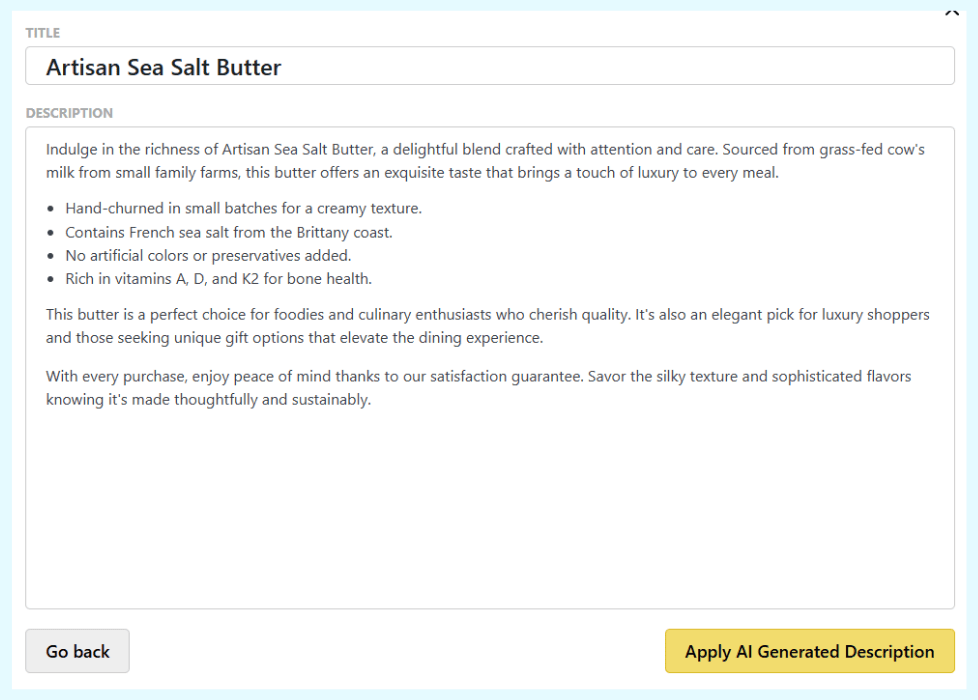
Write benefit-focused copy that helps customers imagine the experience. For example:
Instead of: “Organic almond butter – 16oz jar”
Write: “Creamy organic almond butter packed with plant-based protein and healthy fats. Perfect spread for morning toast, smoothie boost, or post-workout snack. No added sugar or palm oil.”
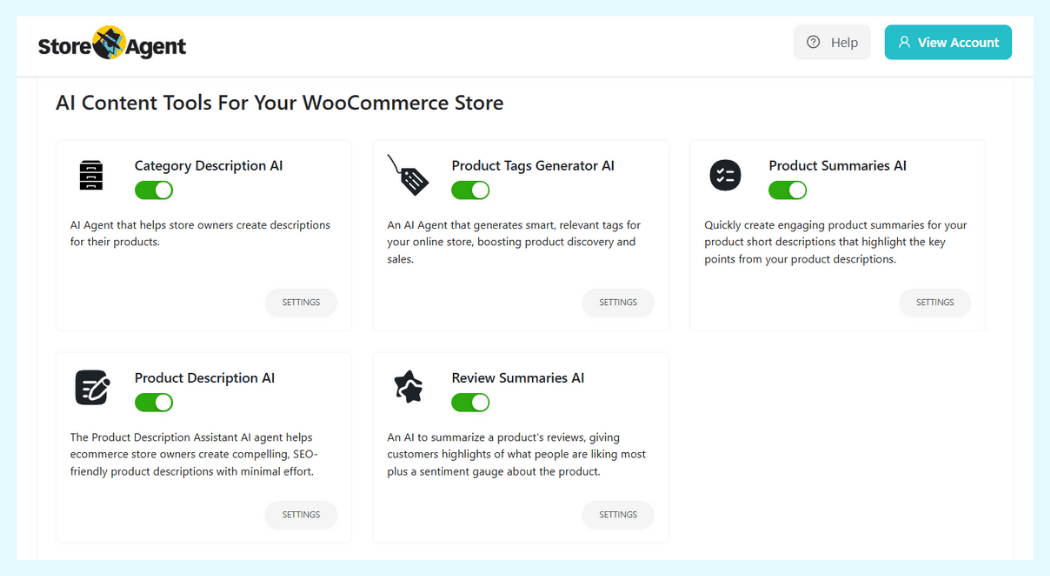
For WooCommerce stores managing hundreds of food products, AI content tools like StoreAgent generate compelling descriptions quickly. Generate on-brand copy in seconds instead of writing each description manually.
Basically, this tool learns your style and maintains your brand voice to avoid generic AI text.
9. Provide 24/7 customer support for food questions
Food customers ask constant questions about ingredients, allergens, serving sizes, storage instructions, and shipping times. Missing these questions means missing sales.
Provide instant answers through live chat, comprehensive FAQ pages, or fast email responses. Transparency builds trust with health-conscious customers.
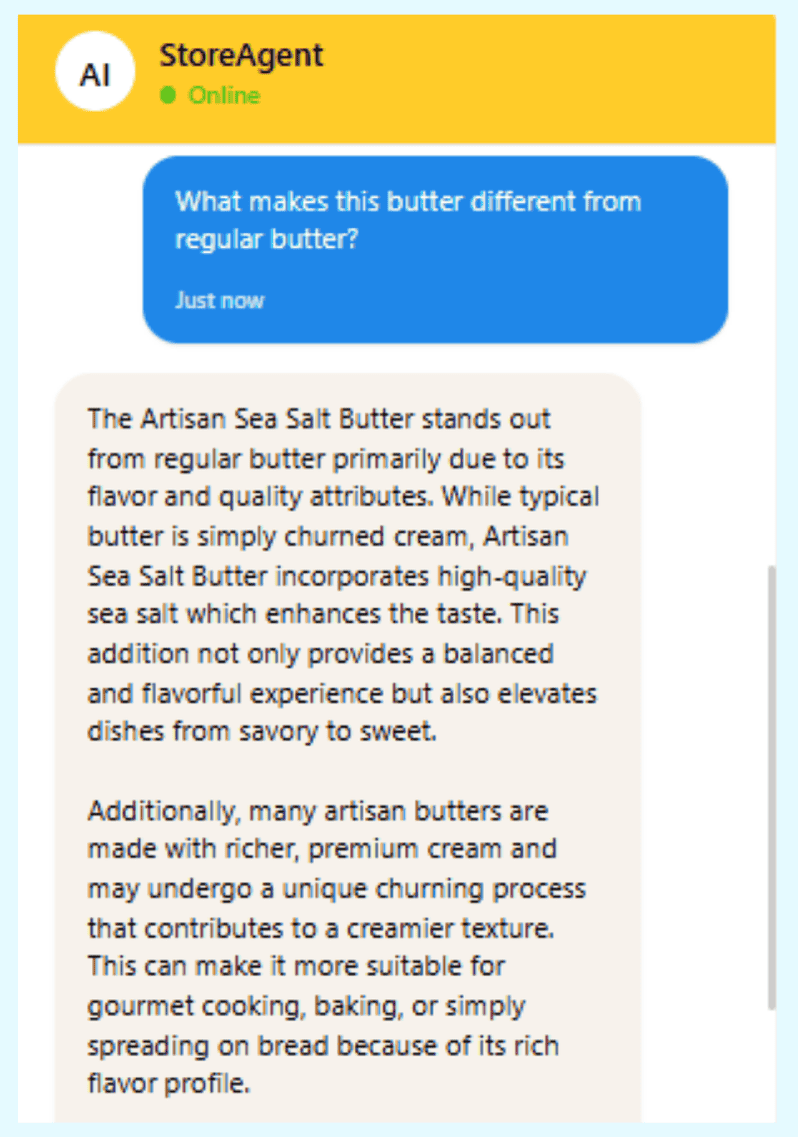
For WooCommerce food stores, a chatbot for customer support answers questions automatically day and night. StoreAgent Chat connects to your catalog and provides dietary recommendations, checks inventory, and tracks orders in real time.
Its multilingual support expands your market without hiring multilingual staff. You don’t lose sales to unanswered questions or delayed responses.
10. Launch a loyalty program that rewards actions
Repeat customers are significantly more valuable than one-time buyers. Reward them for staying engaged with your brand.
Give points for purchases, reviews, signups, and referrals. Show points earned on product pages to boost conversions and average order value.
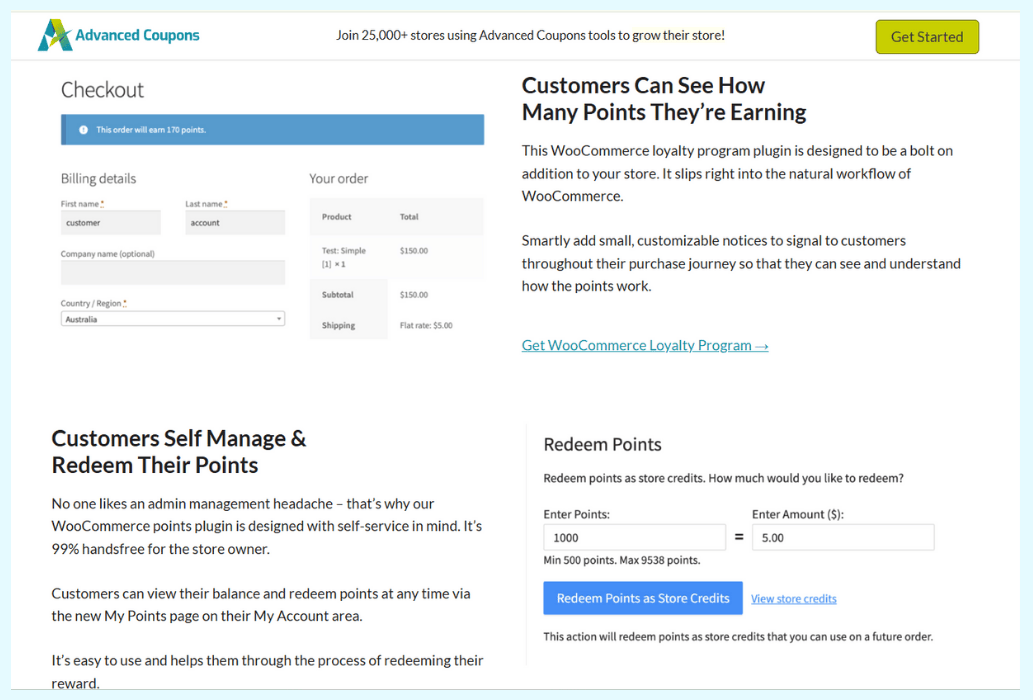
Advanced Coupons Loyalty Program sets up in 5 minutes for WooCommerce stores. Shoppers can redeem points for store credit anytime. You set expiry limits to encourage repeat purchases.
The built-in dashboard tracks points issued, redeemed, and top customers at a glance. You can manually adjust points for VIPs or special occasions. Once set up, loyalty programs run continuously in the background, bringing repeat customers.
Bonus Tip: Add Wishlist functionality to your online store
Most of the time, food shoppers browse multiple times before purchasing meal kits or specialty products.
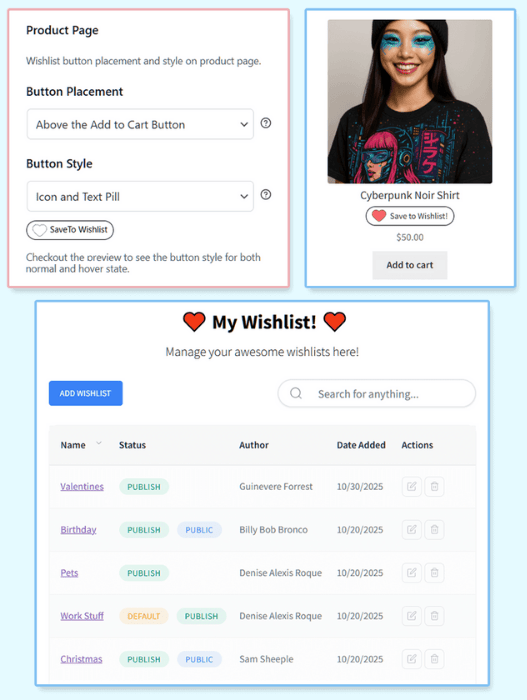
The SaveTo Wishlist plugin is free for WooCommerce stores. Customers create multiple lists like “Weekly Groceries,” “Gift Basket Ideas,” or “Meal Prep.” They can organize products however they want.
Shareable wishlist links bring new customers through trusted recommendations. Friends and family see exactly what products someone wants. This creates two benefits: customers return instead of forgetting items, and shared lists drive referral traffic.
The plugin works with all WooCommerce themes without complicated setup. It captures purchase intent and encourages return visits naturally.
Start Implementing These Culinary Marketing Strategies Today
Culinary marketing strategies help food brands stand out in competitive markets. Start with foundational tactics like brand positioning and social media presence. Add advanced techniques like loyalty programs and AI automation as you grow.
To recap, here are the 10 culinary marketing strategies:
- Define your brand positioning
- Optimize your product packaging & visual identity
- Master Instagram & TikTok food content
- Leverage user-generated content
- Create your unique selling point (USP)
- Partner with complementary brands
- Host local events & experiences
- Write product descriptions that sell the experience
- Provide 24/7 customer support for food questions
- Launch a loyalty program that rewards actions
- Add wishlist functionality to your store
Ready to automate your WooCommerce food store’s content and support? Try the StoreAgent demo to see how the AI chatbot transforms your daily workflow. Explore our plans to see which fit your store’s needs.
Frequently Asked Questions
1. How much budget do I need for culinary marketing strategies?
You can start culinary marketing with zero budget using organic social media, user-generated content, and your existing product descriptions. Many successful food brands grew through free Instagram posts and TikTok videos before investing in paid advertising. Once you see traction, allocate 5-10% of revenue to paid social ads, influencer partnerships, or loyalty program tools.
2. How long does it take to see results from culinary marketing?
Quick wins like user-generated content contests or limited-time offers can drive sales within 2-4 weeks. Building brand positioning and social media following takes 3-6 months of consistent effort. WooCommerce automation tools like AI product descriptions and chatbots deliver immediate results—you’ll see improved engagement and conversions within days of implementation.
3. What are the biggest culinary marketing mistakes food brands make?
The biggest mistake is focusing only on product features instead of experiences and emotions. Listing “organic ingredients” means nothing if you don’t explain why that matters to customers. Other common mistakes include inconsistent posting schedules, ignoring customer questions, generic product descriptions, and trying to appeal to everyone instead of a specific target audience.
4. Do I need a large social media following to start culinary marketing?
No, engagement matters more than follower count. A food brand with 1,000 engaged followers who comment and share will outperform a brand with 10,000 passive followers. Start by posting consistently, responding to every comment, and creating shareable content like recipe ideas or behind-the-scenes kitchen videos. Quality content attracts the right audience over time.
5. Can I use culinary marketing for both restaurants and food ecommerce stores?
Yes, but your tactics will differ slightly. Restaurants focus more on local events, Instagram Stories for daily specials, and Google Maps optimization. Food ecommerce stores prioritize product descriptions, email marketing, loyalty programs, and 24/7 customer support through chatbots. Both benefit from brand positioning, user-generated content, and social media presence.
6. Should I hire a food marketing agency or use AI tools first?
Start with AI tools if you’re managing a WooCommerce store with limited budget. Tools like StoreAgent automate product descriptions and customer support for a fraction of agency costs. Hire an agency when you need creative strategy, influencer partnerships, or large-scale campaigns. Many successful food brands use both—AI for repetitive tasks, agencies for creative direction.